How to get your business recommended by ChatGPT
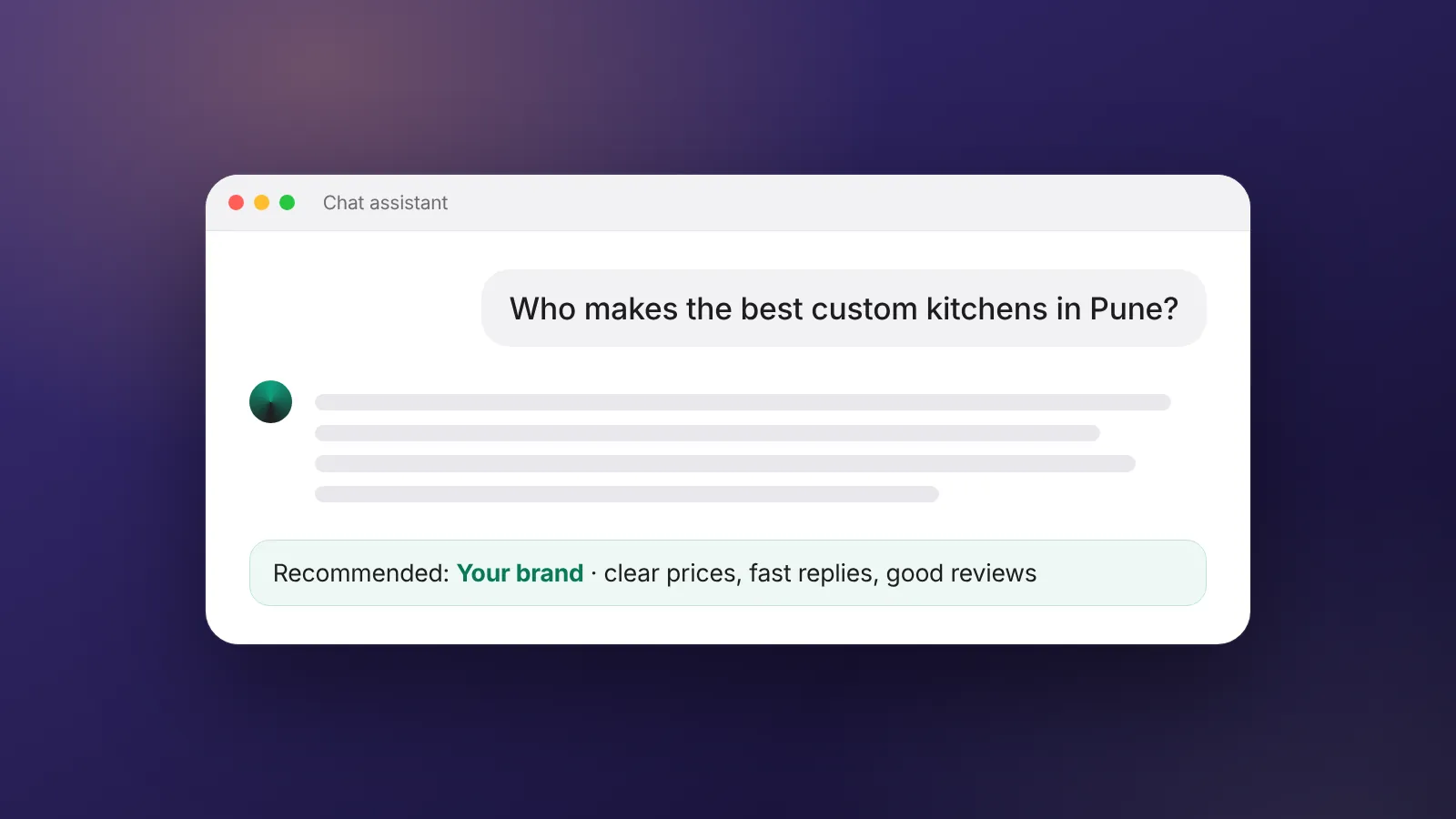
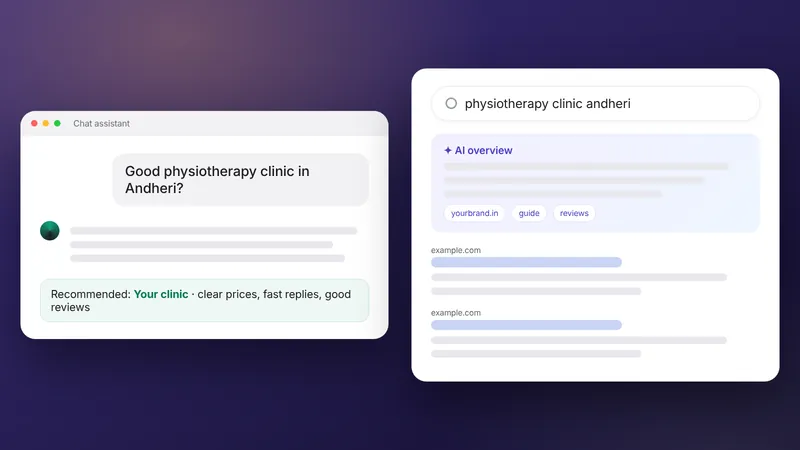
Short answer: You cannot control what ChatGPT recommends, but you can make accurate information about your business easy to find. Keep clear facts on a crawlable website, use one consistent description everywhere, earn genuine reviews and mentions, and publish pages that answer real customer questions. ChatGPT ads are separate and do not change answers.
Can you control what ChatGPT recommends?
No. Nobody outside OpenAI controls ChatGPT's answers, and no agency can guarantee a recommendation.
What you can do is make accurate, consistent information about your business easy to find and easy to understand. That improves your chances. It does not decide the outcome.
Be careful of anyone who claims to know exactly how ChatGPT chooses businesses. OpenAI has not handed agencies a ranking formula. Treat such claims as guesses.
What can you actually influence?
You influence the information that exists about you. An AI assistant can only repeat what is available to it, so the quality of that information matters.
That information lives in a few places:
- Your own website.
- Your Google Business Profile and other listings.
- Reviews on platforms customers trust.
- Mentions in local news, industry directories, blogs and community pages.
- Your social media bios and pages.
If these sources are clear and agree with each other, a tool has less room to get you wrong. If they conflict, it may pick the wrong version.
What should be on your website?
Your website is the one source you fully control. Make it easy to read for people and machines.
Use this checklist:
- A plain "what we do" line near the top of the home page. One sentence, no slogans.
- Location and service area in text: city, neighbourhood and which areas you serve.
- Contact details and hours in text, not only in an image or a map embed.
- Prices or price ranges where you can share them. Questions about cost are common.
- One page per main service, each answering what it is, who it is for and what it costs.
- An FAQ section that answers real questions customers ask on calls and WhatsApp.
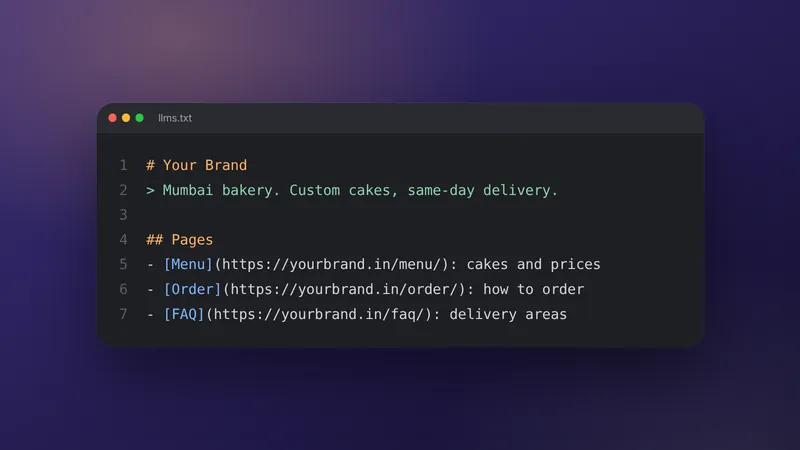
- Structured data (schema markup) for your business type, so machines can read key facts.
- Pages that load without logins or pop-ups, so crawlers can read the content.
If you are starting from scratch, our AI search optimisation guide explains how these pieces fit together.
Why does consistency across the web matter?
Because mismatched details create confusion. If your website says you close at 10 pm and an old directory says 8 pm, a tool may repeat either.
Write one short brand description and reuse it. Keep your business name spelled the same way everywhere. Update your address and phone number on every listing when they change.
Start with your Google Business Profile, since many customers see it first. Google Business Profile Help covers how to edit your details. Our Google Business Profile checklist walks through each field.
How do reviews and mentions help?
They give an outside view of your business. A business that only describes itself gives a tool less to go on than one that others also talk about.
Focus on genuine signals:
- Ask happy customers for honest reviews, and make it easy with a direct link.
- Reply to reviews, including critical ones, calmly and specifically.
- Get listed in respected local and industry directories.
- Share useful knowledge with local media or trade groups when you can.
Never buy reviews, post fake ones or pay for "mentions" on low-quality sites. It breaks platform rules and can undo your work.
Do ChatGPT ads help you get recommended?
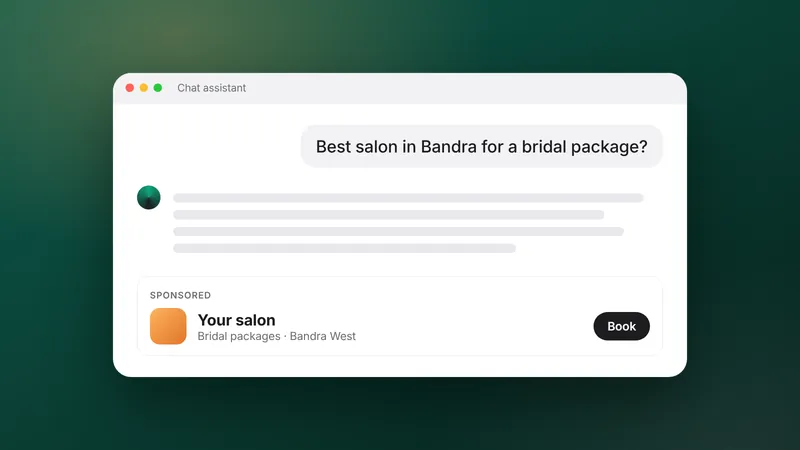
No. ChatGPT ads and ChatGPT's answers are separate. As of October 2026, OpenAI says ads are labelled sponsored placements shown below answers, and that ads do not change answers (OpenAI).
OpenAI also says advertisers do not see users' chats. Ads show to adult users on the Free and Go plans, while Plus and Pro stay ad-free.
As of 21 October 2026, ChatGPT ads were available in 89 countries, including India, the US and the UK (CNBC). They can be useful for reaching people while they research. They are a paid channel, not a way into the answer. Our guide to ChatGPT ads in India covers how they work.
| Approach | Changes ChatGPT's answers? | Worth doing? |
|---|---|---|
| Clear facts on your website | Can help the tool describe you correctly | Yes, always |
| Consistent listings and descriptions | Can reduce wrong or mixed-up details | Yes |
| Genuine reviews and mentions | Gives the tool more outside information | Yes, slowly |
| ChatGPT ads | No, ads are shown separately | Only as a paid channel |
| Fake reviews or paid spam mentions | Unpredictable, and risky | No |
| Agencies promising a guaranteed spot | Nobody can deliver this | No |
How do you test whether ChatGPT mentions you?
Write down real customer questions and ask them regularly. Record whether you are named and whether the details are right.
Worked example (example numbers): A cafe in Indiranagar lists 12 questions, such as "quiet cafe to work from in Indiranagar".
The owner asks each question twice, in fresh chats, which makes 12 × 2 = 24 answers.
The cafe is named in 6 of the 24 answers, which is 6 ÷ 24 = 25%.
In 2 of those 6 answers, the closing time is wrong.
The owner fixes the hours on the website and two old directory listings.
One month later, the owner repeats the same 24 checks and compares the counts.
These are example numbers to show the method, not a forecast.
Use fresh chats so earlier messages do not steer the answer. Save screenshots with dates.
What mistakes should you avoid?
The common ones are easy to fix once you spot them.
- Chasing one magic answer. Answers vary. Track a set of questions over time.
- Keyword stuffing. Writing "best cafe Bengaluru" twenty times makes pages worse for people and machines.
- Ignoring old listings. Outdated directories keep spreading wrong details until you correct them.
- Hiding facts in images. Menus, prices and hours inside photos are hard for crawlers to read.
- Paying for promises. No one can guarantee you a ChatGPT recommendation.
If you would like help, our AI search optimisation service starts with an audit of your facts and listings. It can be added to any WebMaxs monthly plan; ask on your call. Plan prices are on our pricing page.
Frequently asked questions
Does ChatGPT give the same answer to everyone?
No. Answers vary with the exact wording, earlier messages in the chat, the user's location and settings. That is why you should test many questions, not one, and repeat your tests over time.
Can a small business compete with big brands in ChatGPT answers?
Often, yes, for specific local or niche questions. A big brand may win a broad question, but a clear, well-described local business has a fair chance on questions like 'vegan bakery in Bandra that delivers'. Specific pages help here.
Should I ask customers to mention ChatGPT in reviews?
No. Ask for honest reviews about their experience, in their own words. Scripted or incentivised reviews can break platform rules and damage trust if spotted.
Will ChatGPT ever say something wrong about my business?
It can. AI tools sometimes repeat old or mixed-up information. The best defence is correcting the source: your site, your listings and any directory that shows outdated details.
Sources
- OpenAI: New ways to buy ChatGPT ads (5 May 2026)
- CNBC: ChatGPT ads expand to more countries (21 October 2026)
- Google Business Profile Help
Platform rules change. Check the official pages before you launch.
Want this done for your brand?
See how WebMaxs handles AI search optimisation, or tell us about your business and we will bring three ideas and a free sample ad to the call.