What is AI search optimisation (AIO, GEO, AEO), and does your business need it?
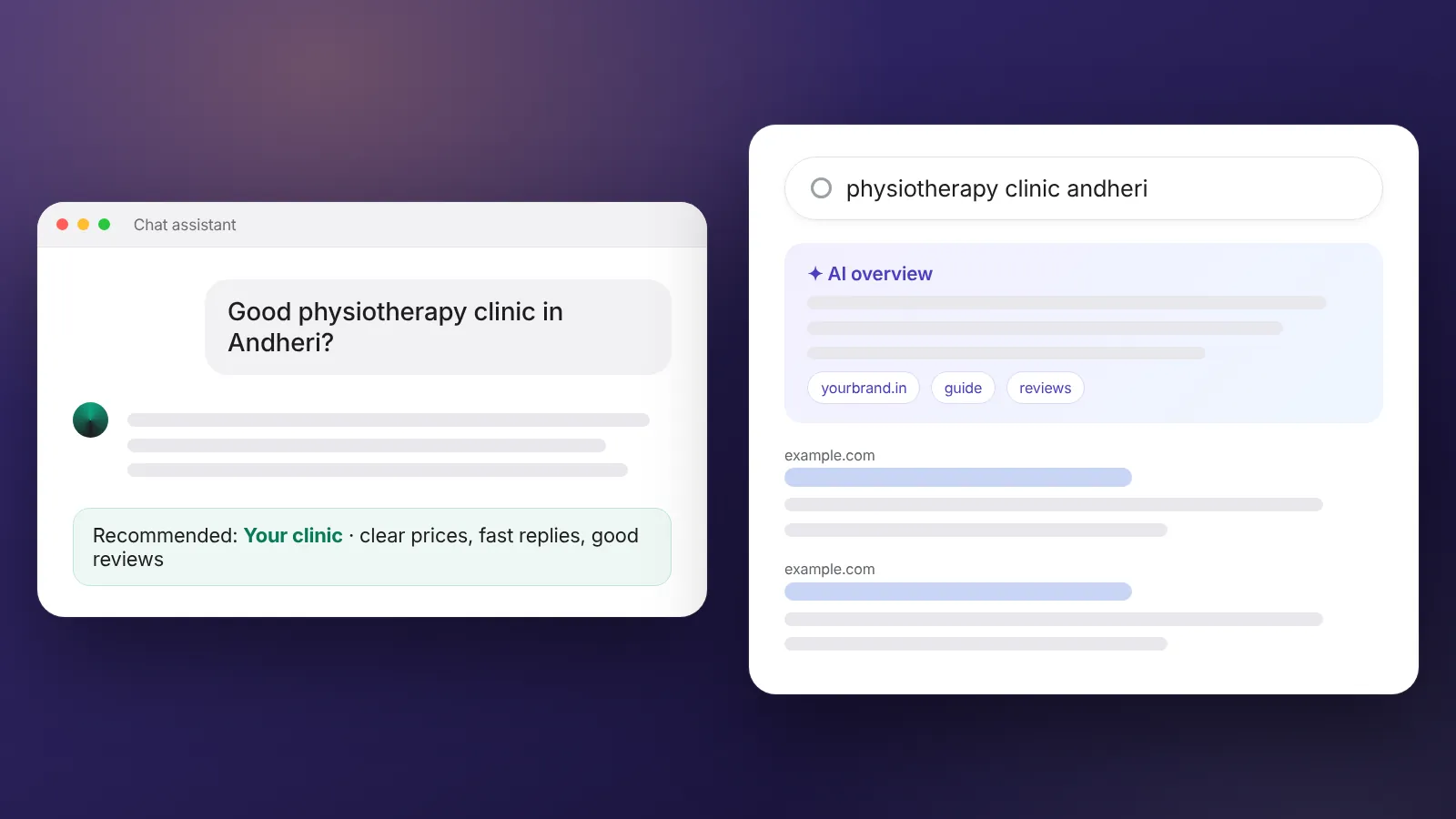
Short answer: AI search optimisation means making your business easy for AI tools like ChatGPT and Google AI Overviews to find, understand and describe correctly. It rests on clear facts, consistent descriptions, crawlable pages, structured data and genuine reviews. It helps most businesses, but nobody can guarantee an AI tool will cite you.
What is AI search optimisation?
AI search optimisation is the work of making your business easy for AI tools to find, understand and describe correctly. It covers tools like ChatGPT, Gemini, Perplexity and Google AI Overviews.
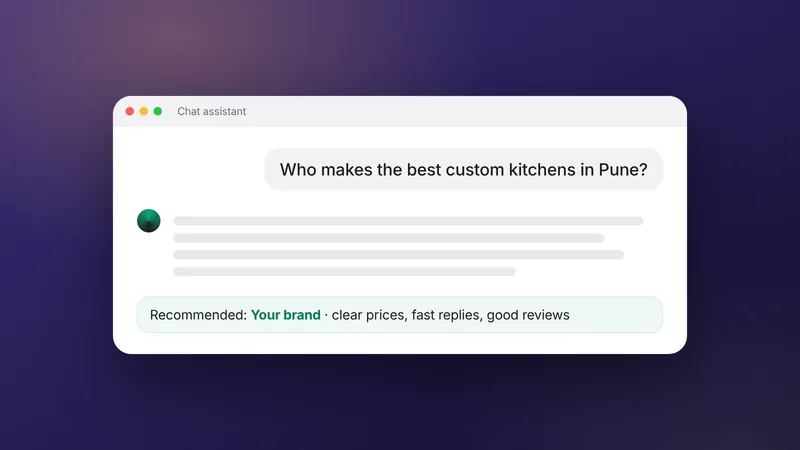
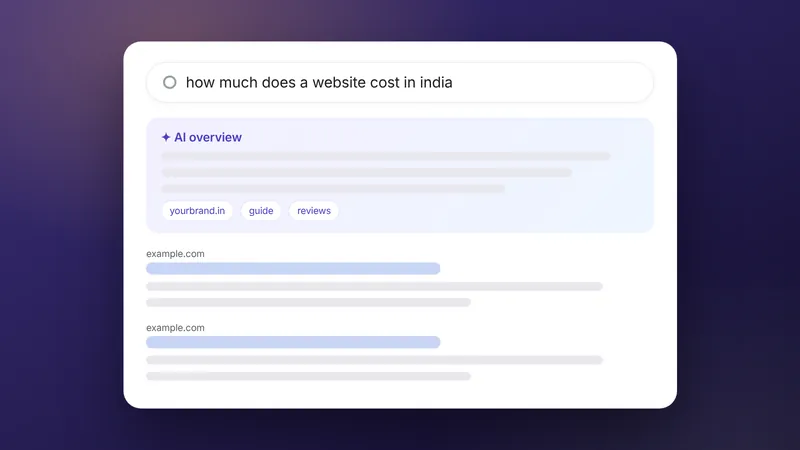
When someone asks one of these tools "best physiotherapist near Andheri" or "which coworking spaces in Pune have day passes", the tool writes an answer. Sometimes it names businesses. Sometimes it links to the pages it used.
AI search optimisation tries to make sure that, when your business comes up, the facts are right. It also tries to give the tool enough clear material to include you at all.
What do AIO, GEO and AEO mean?
They are three names for overlapping ideas. None of them is an official standard, and agencies use them loosely.
| Term | Stands for | What people usually mean |
|---|---|---|
| AIO | AI optimisation (or AI search optimisation) | The whole job: being found and described well by AI tools |
| GEO | Generative engine optimisation | Content that AI tools which generate answers can use and cite |
| AEO | Answer engine optimisation | Pages that answer specific questions directly and clearly |
In practice, all three point to the same checklist. If someone sells you "GEO" and "AEO" as two separate packages, ask what each one changes on your website.
How is it different from normal SEO?
It is mostly the same groundwork with a different emphasis. SEO aims to rank pages in a list of links. AI search optimisation aims to have your facts used inside a written answer.
The overlap is large. Both need pages that load, can be crawled and say clearly what you do. The difference is that AI answers reward consistency. If your website says one thing and your listings say another, a tool may repeat the wrong version.
Google publishes guidance for site owners on its AI features on Search Central. Read it before paying anyone who claims a special trick. Our AI search optimisation service starts from the same SEO basics.
What actually helps AI tools describe your business correctly?
Six things do most of the work. None of them is exotic.
- Clear facts on your own site. Name, address, phone, hours, prices or price ranges, service areas and what you do not offer. Put them in plain text, not only in images.
- One consistent brand description. Write one or two sentences that describe your business. Use the same wording on your site, Google Business Profile, social bios and directories.
- Structured data. Schema markup tells machines what a page is about: a local business, a product, an FAQ, an event. It removes guesswork.
- Crawlable pages. Important content should be in the page's HTML, not hidden behind logins, pop-ups or scripts that never load for a crawler.
- Reviews and mentions. Genuine reviews and mentions on other trusted sites give AI tools more to go on. Never buy or fake them.
- Answer-style content. Pages that ask a real customer question and answer it in the first two sentences. FAQs, pricing explainers and comparison pages work well.
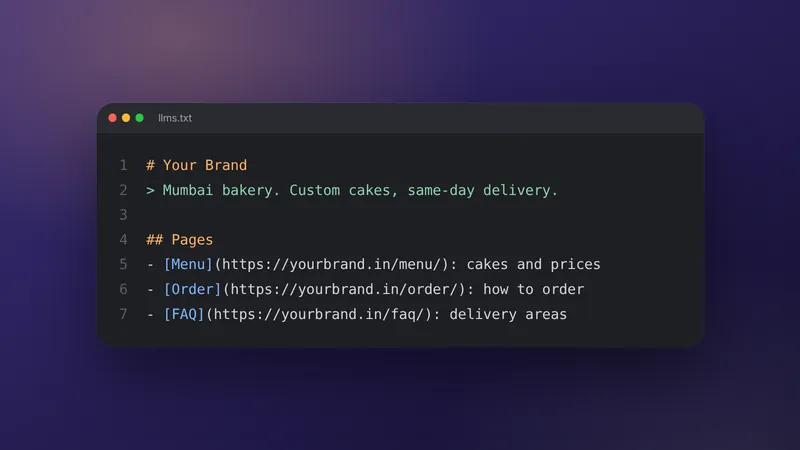
Some sites also add an llms.txt file, a proposed plain summary for AI tools described at llmstxt.org. It is a proposal, and support varies. Our llms.txt guide covers it.
What can nobody promise you?
Nobody can guarantee that ChatGPT, Gemini or Google AI Overviews will cite or recommend your business. Anyone who promises that is guessing or misleading you.
Here is why:
- Each company decides how its tool builds answers, and those systems change often.
- Answers vary with the wording of the question, the user's location and previous messages.
- The same question asked twice can produce different businesses.
Paid ads do not buy a place in the answer either. As of October 2026, OpenAI says ChatGPT ads are labelled as sponsored, shown below answers, and do not change answers (OpenAI).
What you can control is the quality and consistency of the information about you. That improves your odds. It does not guarantee an outcome.
Does your business need it?
Most businesses that customers research before buying will benefit. The more people ask questions before choosing you, the more it matters.
| Business type | How much it matters | Why |
|---|---|---|
| Clinics, lawyers, consultants | High | People ask detailed questions before choosing |
| Hotels, restaurants, venues | High | "Best place for..." questions are common |
| B2B services and software | High | Buyers compare options and ask for shortlists |
| Local shops with walk-in trade | Medium | Maps and Google Business Profile still do most of the work |
| Businesses with no website | Low until fixed | Start with a basic website and listings first |
If you have no website or your Google Business Profile is incomplete, fix that first. AI search optimisation builds on those basics. It does not replace them.
How do you check where you stand today?
Make a list of real customer questions and ask them in two or three AI tools. Record whether you are mentioned and whether the facts are correct.
Worked example (example numbers): A dental clinic in Pune writes 20 questions customers might ask, such as "best clinic for braces in Baner".
It asks each question in 3 AI tools, which makes 20 × 3 = 60 checks.
The clinic is mentioned in 9 of the 60 answers, which is 9 ÷ 60 = 15%.
In 3 of those 9 mentions, the opening hours are wrong.
The clinic fixes its hours everywhere, adds structured data and writes 5 question-and-answer pages.
It repeats the same 60 checks two months later and records the new count.
These are example numbers to show the method. They are not a prediction of results.
Keep the same questions each time so you can compare fairly. Save screenshots, because answers change.
What does it cost to get help?
You can do much of this yourself with time and care. If you want help, an agency should start with an audit of your facts, listings and pages, then fix what it finds.
At WebMaxs, SEO and AI search optimisation can be added to any monthly plan. The price depends on scope, so ask on your call. Plan prices are on our pricing page. For practical next steps, see how to get recommended by ChatGPT and how to show up in Google AI Overviews.
Frequently asked questions
Is AI search optimisation replacing SEO?
No. Most of it is good SEO done carefully, with extra attention to clear facts and consistent descriptions. Search engines still send traffic, and AI tools often rely on the same public web pages. Treat the two as one piece of work.
How long before changes show up in AI answers?
There is no fixed timeline. It depends on when each tool next reads your pages and how it builds its answers. Fix the facts first, then check the same questions again every month or two.
Can I pay ChatGPT to recommend my business?
Not in its answers. As of October 2026, OpenAI says ChatGPT ads are labelled sponsored placements shown below answers, and that ads do not change answers. Ads and organic answers are separate.
Should I block AI crawlers on my website?
That is a business choice. If a tool cannot read your pages, it has less to go on when people ask about you. Most businesses that want to be found leave their public pages open and keep private areas behind a login.
Is an AI search audit worth paying for?
It can be, if it ends in a list of specific fixes to your site and listings. Be wary of an audit that only produces a score. Ask what will change on your pages and how you will check it afterwards.
Sources
- Google Search Central: AI features and your website
- llmstxt.org: The /llms.txt file proposal
- OpenAI: New ways to buy ChatGPT ads (5 May 2026)
Platform rules change. Check the official pages before you launch.
Want this done for your brand?
See how WebMaxs handles AI search optimisation, or tell us about your business and we will bring three ideas and a free sample ad to the call.