How real estate developers should measure cost per lead
Short answer: Track four numbers, not one: cost per lead, cost per qualified lead, cost per site visit and cost per booking. Cheap leads often fail to qualify or visit. Record every lead's stage in a CRM, call new leads quickly, and judge campaigns on cost per site visit and per booking.
Why is cost per lead a misleading number on its own?
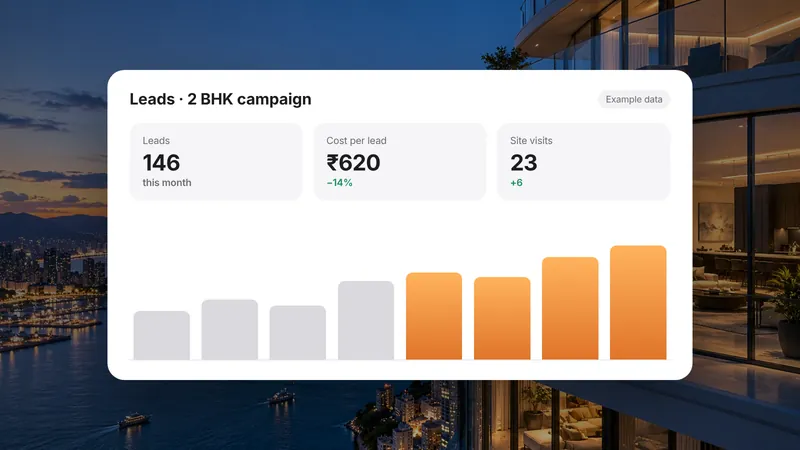
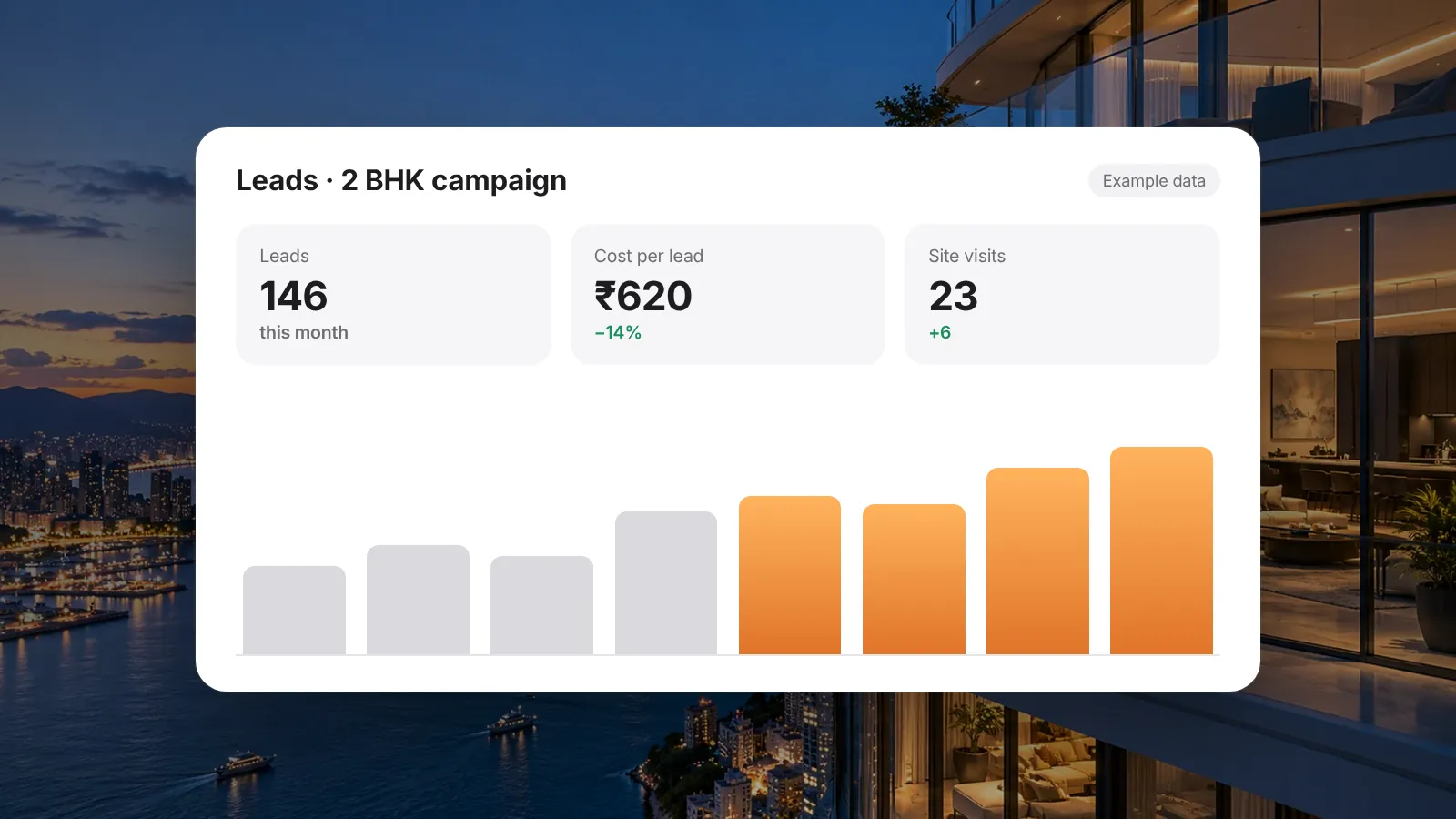
Cost per lead tells you how cheaply you collected names and numbers. It says nothing about whether those people can buy, want to buy, or will ever visit.
In real estate, the gap between a lead and a booking is large. A campaign with a low cost per lead can fill the CRM with wrong numbers, browsers and people outside your budget. A campaign with a higher cost per lead can still produce more bookings for the same spend.
If the ads are judged on cost per lead alone, the system rewards the wrong campaign. The fix is to track each step after the lead.
What are the four costs a developer should track?
Track cost per lead, cost per qualified lead, cost per site visit and cost per booking. Each one divides the same ad spend by a smaller, more valuable number.
| Metric | Formula | What it tells you | Mostly depends on |
|---|---|---|---|
| Cost per lead (CPL) | Ad spend ÷ leads | How cheaply you collect enquiries | Targeting, creative, form |
| Cost per qualified lead (CPQL) | Ad spend ÷ qualified leads | Whether the right people are enquiring | Targeting, offer, form questions |
| Cost per site visit | Ad spend ÷ completed site visits | Whether interest is real | Speed to lead, sales calls |
| Cost per booking | Ad spend ÷ bookings | What a sale really costs in ads | Project, pricing, sales team |
Agree on definitions before the campaign starts. "Qualified" and "site visit" must mean the same thing to marketing and sales.
How do the numbers work in practice?
Two campaigns can look very different at the top and swap places at the bottom. The worked example shows how.
Worked example (example numbers): A developer spends ₹5,00,000 a month on each of two campaigns for one project.
Campaign A brings 1,000 leads, so CPL is ₹500. Of these, 300 qualify, so CPQL is about ₹1,667.
Sixty people visit the site, so cost per site visit is about ₹8,333. Four book, so cost per booking is ₹1,25,000.
Campaign B brings 500 leads, so CPL is ₹1,000. Of these, 250 qualify, so CPQL is ₹2,000.
Seventy-five visit, so cost per site visit is about ₹6,667. Six book, so cost per booking is about ₹83,333.
On cost per lead, Campaign A looks twice as good. On cost per booking, Campaign B is about a third cheaper.
These figures are invented for illustration. They are not typical or average results for any market.
Bookings in real estate often happen weeks or months after the lead. Group leads by the month they arrived. Then track how many from each month go on to visit and book, rather than comparing this month's spend with this month's bookings.
What makes a lead qualified?
A qualified lead matches the project on budget, location, configuration and timeline, and can be reached. Write these rules down and keep them short.
A simple checklist might be:
- The phone number works and the person answered.
- Their budget fits the project's price range.
- They want the configuration you offer, such as a 2 BHK or 3 BHK.
- They plan to buy within a set period, for example the next six months.
Add one or two qualifying questions to your lead form. A question on budget or timeline lowers the number of leads but raises their quality. That trade is usually worth testing.
Forms that pre-fill a person's details can bring in many leads with little intent. Watch your qualification rate closely if you use them.
How much does speed to lead change the numbers?
A lot. The longer a lead waits for a call, the more likely they have spoken to another project or forgotten they enquired.
Make the first contact fast and consistent:
- Send an instant acknowledgement with project details and a way to book a visit.
- Call within minutes during working hours, and first thing the next morning for late leads.
- Try more than once, at different times of day, before marking a lead unreachable.
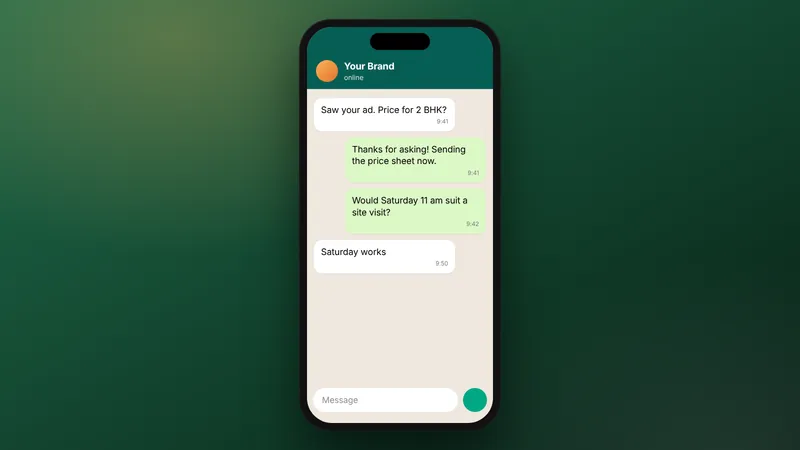
Some buyers prefer WhatsApp to calls, so offer both. The WhatsApp Business Platform is Meta's product for businesses that message customers at scale. Meta's documentation on getting opt-in for WhatsApp explains how to collect permission before you message people. Our post on WhatsApp lead follow-up covers the setup.
A slow follow-up process makes good ads look bad. Fix it before you change the campaign.
Why does the CRM decide whether you can measure any of this?
Without a CRM that records every lead's stage, you can only see cost per lead. Everything past the form becomes a guess.
Each lead should carry its source, campaign and ad, so you know where it came from. Its stage should update as it moves: new, contacted, qualified, visit booked, visited, booked or lost. Keep a reason for lost leads too.
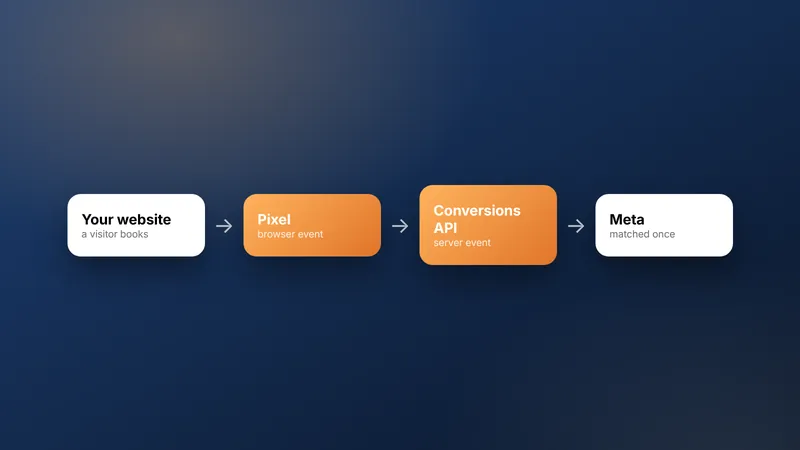
The stages also make better ads possible. You can feed qualified leads and visits back to the ad platforms as events. They then learn which people move forward, not only which people fill forms. Our post on the Meta Pixel and Conversions API explains the tracking side.
Which number should you optimise the ads for?
Optimise for the deepest stage that has enough volume. For most projects, that means qualified leads or site visits, not bookings.
Bookings are usually too few and too slow for the ad platforms to learn from. Leads are plentiful but noisy. Qualified leads and site visits sit in between.
Review cost per booking monthly to confirm the direction. If a campaign is cheap on site visits but never books, look at the project offer and the sales process too.
How should you report this each month?
Use one table with all four costs for each campaign, side by side. Add a line on what will change next month and why.
Show leads by the month they arrived, with how many have since qualified, visited and booked. That makes slow-moving bookings visible instead of hidden.
WebMaxs reports results as leads and cost per lead. On the Full Funnel plan, we also set up CRM and WhatsApp follow-up, so later stages can be tracked. Plans and prices are on our pricing page, and our performance marketing page explains the approach. See our real estate page and an example real estate showcase for more.
Frequently asked questions
How long should we wait before judging a real estate campaign?
Judge lead quality and site visits within a few weeks, as they come in. Bookings take longer, so review cost per booking on a rolling basis of two to three months. Do not switch off a campaign only because it has no bookings in its first fortnight.
Should channel partners' leads be counted in the same numbers?
Keep them separate. Broker and channel partner leads have a different cost structure, usually a commission on sale. Mixing them with paid ad leads makes both harder to judge.
Is a missed call a lead?
Count it as a lead only once someone has called back and spoken to the person. Missed calls that nobody returns are lost leads, and they show a follow-up problem rather than an ad problem.
What if the sales team does not update the CRM?
Then nobody can measure cost per qualified lead or per booking, and the ads get judged on cost per lead alone. Make CRM updates part of the daily sales routine, and keep the stages few and simple so it is quick to do.
Can the ad platforms optimise for site visits instead of leads?
They can learn from events you send back to them, such as a lead being marked qualified or a visit being booked. This needs your CRM and tracking to be set up to share those stages, which takes some technical work.
Sources
Platform rules change. Check the official pages before you launch.
Want this done for your brand?
See how WebMaxs handles Performance marketing, or tell us about your business and we will bring three ideas and a free sample ad to the call.