What a hotel booking website needs to win direct bookings
Short answer: A hotel website wins direct bookings when guests can check dates and rates straight away, book in a few taps on a phone, and trust what they see. That means a built-in booking engine, fast pages, honest photos, clear policies, a direct-booking perk, WhatsApp for quick questions, and tracking that shows which marketing brings bookings.
What does a hotel website need to win direct bookings?
It needs to make booking direct as easy as booking on a travel app, and give guests a reason to do it. Every extra step or doubt gives a guest a reason to go back to the travel app.
A guest who lands on your site usually wants three answers fast. Is there a room on my dates? What does it cost? Can I trust this place? The rest of this guide is about answering those questions in the first few seconds, on a phone.
You can see how these pieces fit together in our hotel concept site.
Why does the booking engine matter so much?
Because it is where the money changes hands. A clumsy booking engine undoes every other improvement on the site.
Look for a booking engine that:
- Opens on your own site, or looks like part of it, not a jarring third-party page.
- Shows live availability and rates for the dates the guest picked.
- Completes a booking in as few steps as possible.
- Works properly on a phone, including the payment step.
- Sends a clear confirmation by email, and ideally on WhatsApp with consent.
- Lets you add packages, promo codes and direct-booking perks.
- Sends booking data to your analytics and ad platforms.
Test it yourself every month. Book a real room on your phone, then cancel it. You will find problems guests never report.
What should guests see above the fold?
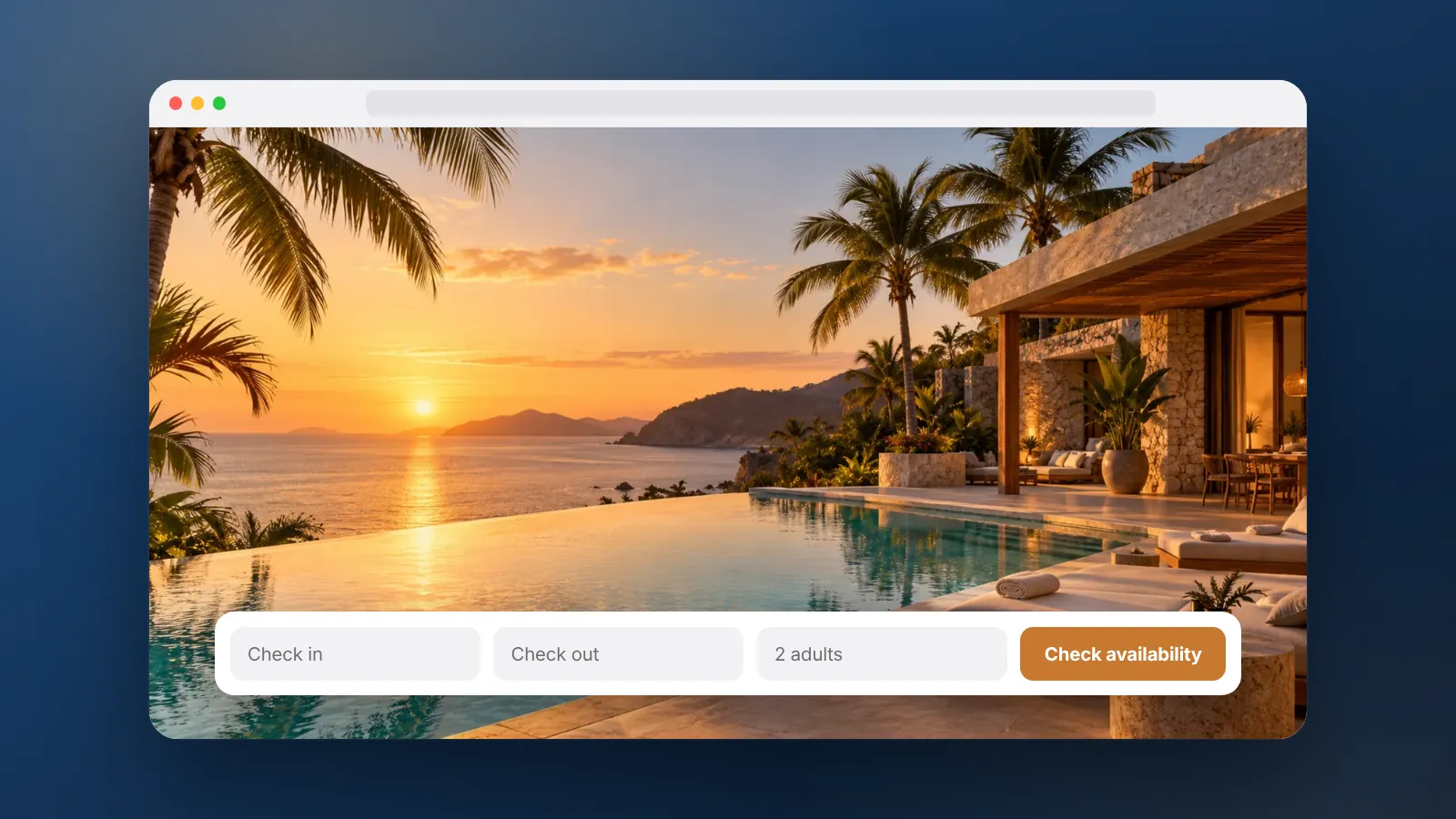
A date picker, a "check availability" button and your starting rate. These should be visible without scrolling on a phone.
Above the fold means the part of the page visible before scrolling. On many hotel sites it holds only a large slider of photos and a menu. That looks nice but makes guests hunt for the one thing they came to do.
A strong first screen has:
- The hotel name and location in one line.
- One strong photo, not a slow slider.
- Check-in and check-out dates, guests, and a booking button.
- A short line on your direct-booking perk.
- A WhatsApp or call button for quick questions.
How fast does the site need to be on mobile?
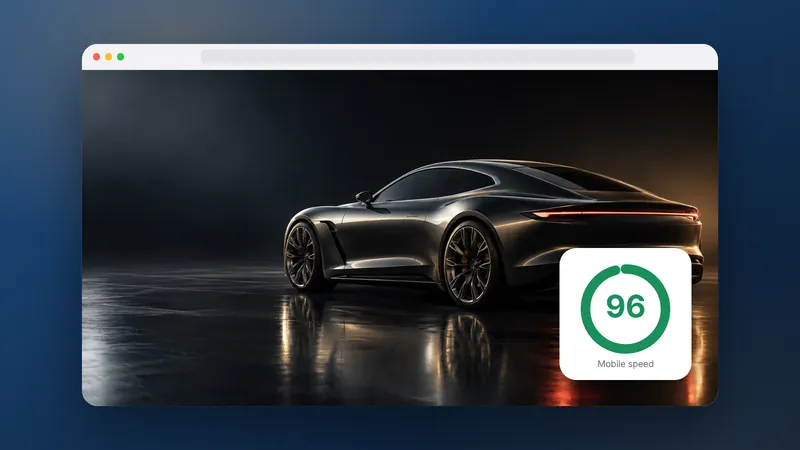
Fast enough that the main photo and booking box appear quickly on mobile data. Google's web.dev guide to Web Vitals sets a "good" target of 2.5 seconds or less for the main content to appear, as of October 2026.
Hotel sites are often slow because of huge photos, video backgrounds and many plugins. Resize photos to the size they are shown at, avoid autoplay video on the first screen, and remove widgets nobody uses. Our guide to website speed for ads has a full table of fixes.
Which photos and room details help guests decide?
Real, recent and well-lit photos of every room type, plus the details guests check before booking. Honest photos also reduce complaints after arrival.
For each room type, show:
- The whole room, the bed, the bathroom and the view.
- Size, bed type, maximum guests and key amenities.
- What is included in the rate, such as breakfast or Wi-Fi.
- Accessibility details if relevant.
Add photos of the entrance, reception, dining, pool and surroundings. Guests want to picture arriving, not just sleeping.
How do offers and direct-booking perks help?
They give guests a reason to book on your site instead of a travel app. The perk does not have to be a discount.
Common direct-booking perks include free breakfast, early check-in or late check-out when available, a welcome drink, flexible cancellation or a room upgrade on arrival. Show the perk next to the booking box, not buried on an offers page.
Packages help too. A "weekend for two" or "family staycation" package gives ads and social posts something specific to promote.
How do you build trust with a first-time guest?
By being clear about the things guests worry about. Uncertainty sends people back to the travel app they already trust.
| Element | What good looks like | Common mistake |
|---|---|---|
| Rates and taxes | Final price, with taxes and fees shown before payment | Extra charges appearing at the last step |
| Cancellation policy | Plain words, shown next to each rate | Policy hidden in a separate terms page |
| Check-in and check-out | Times, ID requirements and early or late options | Guests finding out at reception |
| Reviews | Links to your real reviews on independent sites | Hand-picked quotes with no source |
| Contact details | Address, map, phone and WhatsApp on every page | A contact form only |
| Payment | Secure, familiar payment options | Unclear payment page or odd redirects |
| Location | Distances to the airport, station and key sights | Only a map pin with no context |
Never write or edit reviews yourself. Link to genuine reviews and reply to them publicly, good and bad.
Where does WhatsApp fit in?
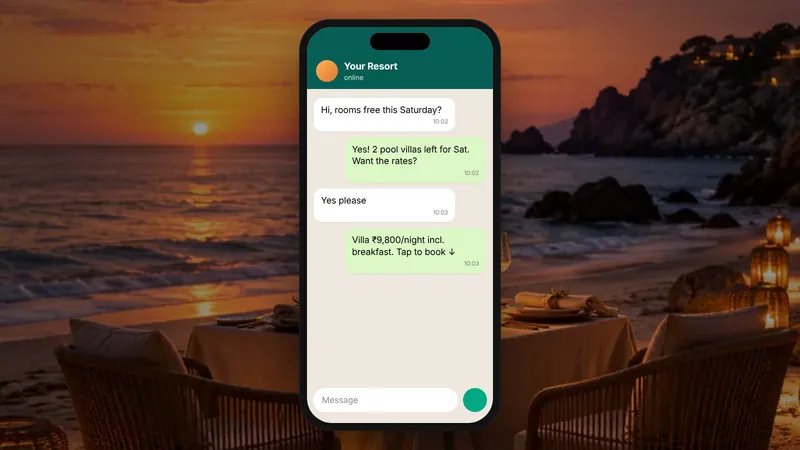
As the quick-question channel, for guests who want to ask before they book. Some guests prefer a short chat to an email or phone call.
Put a WhatsApp button near the booking box and on room pages. Reply quickly during working hours, and set an away message for nights. If you plan to send guests messages first, such as offers or reminders, collect their opt-in. Meta's guide to getting opt-in for WhatsApp explains how, as of October 2026. Larger hotels can use the WhatsApp Business Platform to connect messages to their systems.
Our post on WhatsApp automation for hotels and restaurants covers replies, reminders and follow-up in more detail.
How do you know which marketing brings bookings?
Track bookings, not just visits. Your booking engine should report each completed booking, with its value, to your analytics and ad platforms.
Check three things. First, that a test booking shows up as a conversion. Second, that ad links carry campaign tags. Third, that phone and WhatsApp enquiries are counted somewhere, even in a simple sheet.
Worked example (example numbers): a hotel takes 100 bookings a month at an average of ₹6,000 each.
If all came through travel apps at an example commission of 18%, it would pay 100 x 6,000 x 0.18 = ₹1,08,000 in commission.
Suppose 30 of those bookings move to the website instead, so 70 still pay commission.
Commission falls to 70 x 6,000 x 0.18 = ₹75,600, a saving of ₹32,400 a month.
That saving has to cover the booking engine, any ad spend and the direct-booking perk.
All figures are example numbers to show the maths, not real rates or a promise.
Running this sum with your own numbers tells you what you can sensibly spend to win direct bookings. Our guide to Google Ads for hotels covers that side.
How can WebMaxs help?
We plan and build hotel websites with our development partner CodeGenIT, as fixed-price projects quoted after a free scope call. See the websites service page and our page for hotels and resorts. Monthly marketing plans, including Full Funnel with WhatsApp follow-up, are on the pricing page.
Frequently asked questions
Should our website rates match the OTA rates?
Check your contracts with each online travel agency first, as terms differ. Many hotels keep the room rate in line and add value for direct guests instead, such as breakfast or a later check-out. That keeps you on the right side of agreements while still giving a reason to book direct.
Do we need a separate mobile site?
No. One responsive site that works well on phones is easier to maintain. What matters is testing the full booking flow on a real phone, from the home page to the confirmation email.
Can we take bookings over WhatsApp instead of a booking engine?
You can take enquiries there, but a booking engine is safer for confirmed bookings. It checks live availability, takes payment and sends confirmations. Use WhatsApp for questions and for guests who prefer to talk first.
How many photos should each room have?
Enough to show the whole room, the bathroom, the view and any special feature. Five to eight good photos per room type is a sensible starting point. Quality and honesty matter more than quantity.
Is it worth running ads to the website?
It can be, if the site converts well and tracking is in place. Without tracking, you cannot tell whether ad spend brought bookings. Fix the site and the tracking first, then test a modest budget.
Sources
Platform rules change. Check the official pages before you launch.
Want this done for your brand?
See how WebMaxs handles websites, or tell us about your business and we will bring three ideas and a free sample ad to the call.