Google ads for hotels: winning direct bookings from OTAs
Short answer: Start by protecting searches for your own hotel name, then add search campaigns for your area and trip types. Send every click to your own booking engine, keep rates in line with your OTA agreements, and track completed bookings and revenue rather than clicks. Plan budgets ahead of each season.
Why do hotels lose bookings they could have taken direct?
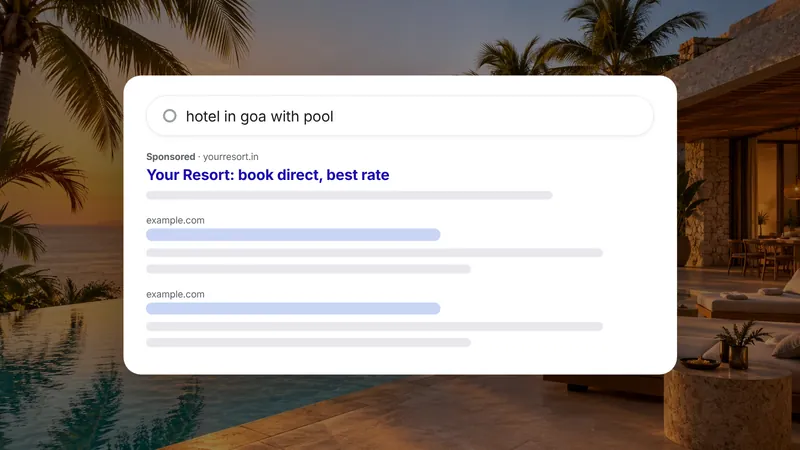
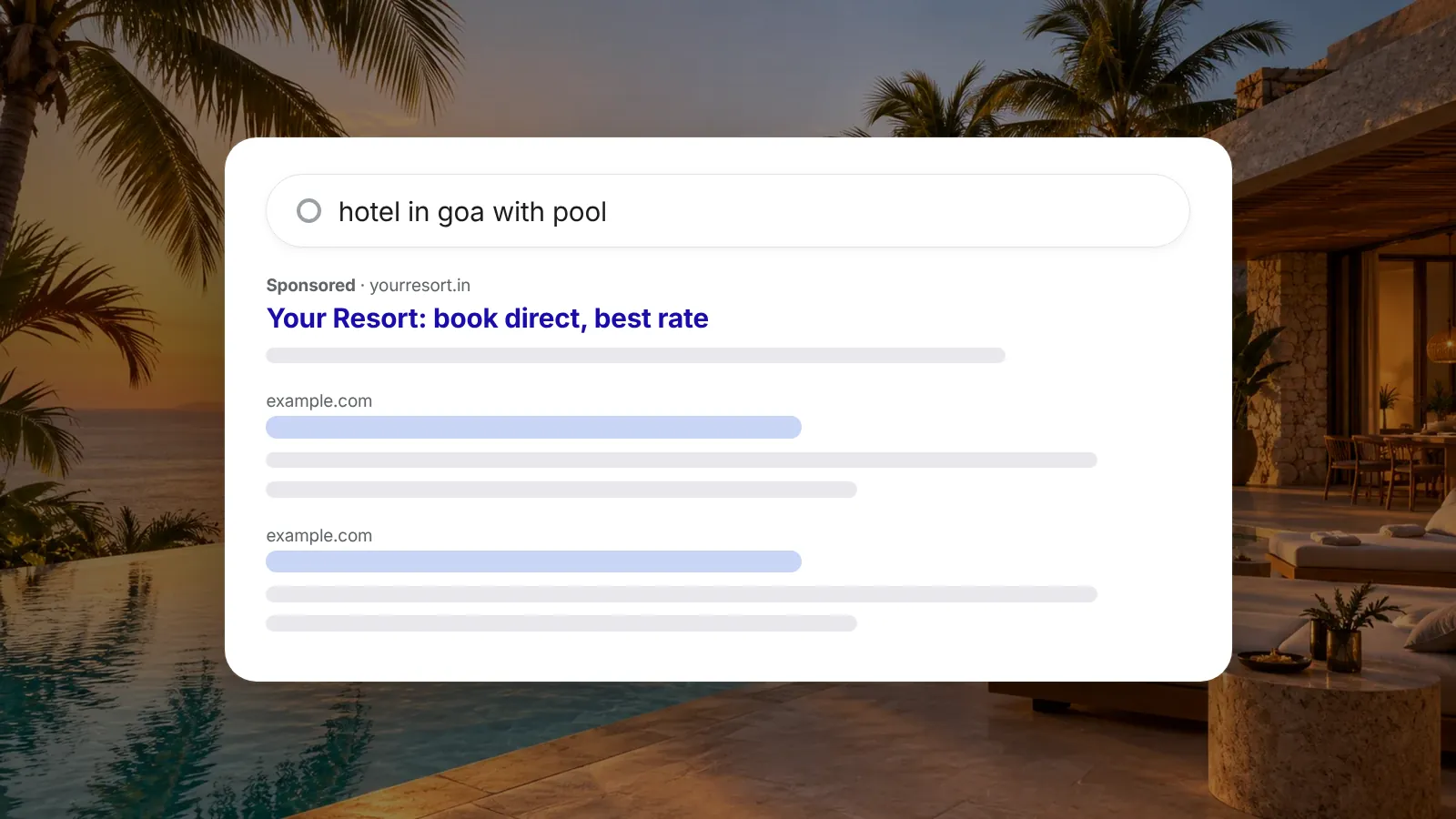
Many guests find a hotel on an OTA, then search its name on Google before booking. If an OTA ad sits above your own listing, they often book there and you pay commission.
That is a booking you had already won. The guest chose your property. The OTA only collected the last click.
Google search ads let you show up at that moment with your own offer. Done well, they move some of those guests to your own booking engine. They will not remove OTAs from your mix, and they should not try to.
Should you bid on your own hotel name?
Yes, for most hotels. A small brand campaign makes sure your own ad and link appear when someone searches your name.
Search your hotel name in Google from a few cities and devices. Note who appears in the ads above your listing. If you see OTAs or resellers, you are competing for your own guests.
Brand clicks often cost less than broad searches, but check your own numbers. Write the ad around reasons to book direct. Good ones include:
- A perk only on your own site, such as breakfast, late checkout or an upgrade on availability.
- Direct contact with the property for special requests.
- Clear cancellation terms.
Keep the brand campaign separate from everything else. It behaves very differently, and mixing it in makes the other campaigns look better than they are.
Which searches should a hotel target beyond its name?
After your name, target searches that show a guest who fits your property and is close to booking. Think about place, trip type and timing together.
| Campaign | Example searches | What it does | Watch out for |
|---|---|---|---|
| Brand | your hotel name, name plus "booking" | Keeps guests who already chose you | Do not count these as new demand |
| Area | "resort near [lake or town]", "hotel in [neighbourhood]" | Finds guests deciding where to stay | Broad city terms can be costly |
| Trip type | "pool villa for family [area]", "wedding venue resort [city]" | Matches your real strengths | Only target what you truly offer |
| Returning visitors | people who visited your site but did not book | Reminds undecided guests | Cap how often they see you |
Exclude searches that will never book, such as jobs, internships or "free". Review which searches actually triggered your ads, and keep adding exclusions.
Be honest in the ad. If the property is 40 minutes from the beach, do not write "beachfront". Mismatched promises lead to refunds and poor reviews.
Where should the ad click land?
Send clicks to a page on your own site that leads straight into your booking engine. Ideally, dates and room types are visible within one tap.
A slow or confusing page wastes the click you paid for. Check the mobile experience first, as many guests search and book on their phones. Our post on hotel booking websites covers what that page needs.
A few practical checks:
- The rate shown on the page matches the ad.
- The booking engine loads quickly on a mid-range phone.
- A WhatsApp or call button is visible for guests who want to ask first.
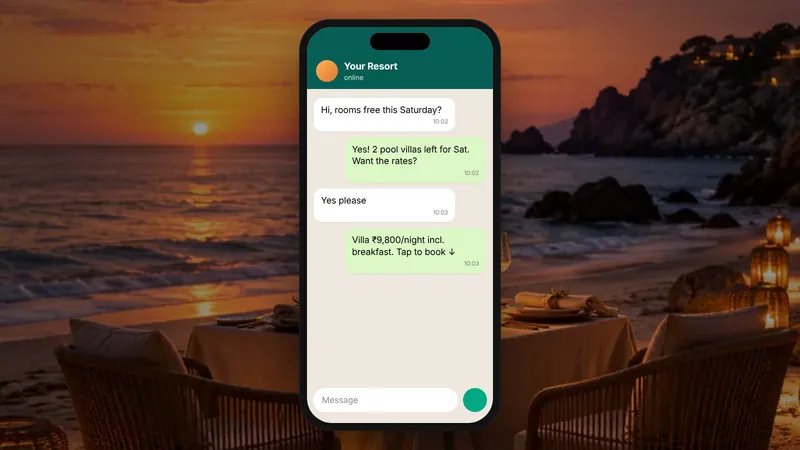
For enquiries that come in on WhatsApp, a quick reply matters. The WhatsApp Business Platform lets hotels handle these at scale, and our post on WhatsApp automation for hotels explains the follow-up.
Also keep your free listing accurate. Google Business Profile Help explains how to manage it. Point its website link to your own site, not an OTA.
How does rate parity affect your ads?
Many OTA contracts include terms about the prices you may show on your own website. Read yours before you advertise a lower direct rate.
Breaking those terms can cause problems with the OTA relationship. If you are unsure what your contract allows, ask the OTA account manager or your lawyer.
You can often compete without a lower headline price. Value-adds work well: a free meal, airport pickup or flexible checkout. These make direct booking the better deal while the room rate stays consistent.
Check your own rates across channels each week. If an OTA shows a lower price than your site, guests will notice. Your ad budget then pays to send them to a worse offer.
How do you know if the ads are paying for themselves?
Track completed bookings and booking value from the ads, not clicks or impressions. Then compare the ad cost with the commission you would otherwise have paid.
Ask your booking engine provider whether it supports ad conversion tracking on the confirmation step. Some engines run on a separate domain, which needs extra setup to track properly.
Worked example (example numbers): A 40-room resort takes 100 OTA bookings a month at an average of ₹12,000 each.
At an example OTA commission of 18%, that costs 100 × ₹12,000 × 18% = ₹2,16,000 a month.
It spends ₹40,000 a month on Google search ads and moves 30 of those bookings to its own engine.
Commission saved is 30 × ₹12,000 × 18% = ₹64,800.
After the ₹40,000 ad spend, the resort is ₹24,800 better off, before any management fee.
If only 15 bookings had moved, the saving would be ₹32,400 and the ads would barely break even.
These figures are for illustration only. Your commission rate, room rates and results will differ.
Be strict about brand searches. Some of those guests would have booked direct anyway. Look at total direct bookings over time, not only what the ad platform reports.
How should budgets change with the seasons?
Spend ahead of demand, not during it. Guests book peak dates weeks or months in advance, so the searches start well before the season.
Plan a simple calendar for the year:
- Raise budgets four to eight weeks before peak months, long weekends and festival holidays.
- Lower them, or shift to offers, when occupancy is already high.
- In the off-season, promote packages that suit it, such as monsoon stays or workations.
Adjust by dates as well as by month. A weekday-heavy business hotel needs a different pattern from a weekend getaway resort.
What does it cost to have someone run this?
There are three costs: the ad spend paid to Google, the management fee, and any creative or landing page work. Keep them separate when you compare quotes.
At WebMaxs, Google ads are managed on the Launch Growth and Full Funnel plans, with ad spend paid from your own account. Prices are on our pricing page, and you can see how we approach Meta and Google ads.
For hotel-specific work, see our hotels and resorts page and an example hotel showcase.
Frequently asked questions
Can a small boutique hotel run Google ads on a small budget?
Yes, if the budget goes to the searches closest to a booking first. That usually means your hotel name and a few specific area searches. Broad terms like 'hotels in Goa' can use up a small budget quickly without many bookings.
Should we stop listing on OTAs once Google ads are running?
Usually not. OTAs bring guests who would never have found you, especially international and last-minute travellers. The aim is a better mix, with more repeat and high-intent guests booking direct.
How long before we can judge the campaign?
Give it at least one full booking cycle, which for many hotels is four to eight weeks. Guests often search several times before they book. Judge on bookings and revenue, not on the first week of clicks.
Do Google ads help our Google Business Profile?
They are separate. Your profile is the free listing that shows in Maps and local results. Keep it accurate and point its website link to your own site, because many guests check it before they book.
What should we track besides bookings?
Track calls and WhatsApp enquiries from the ads too, because many guests in India prefer to ask before paying. Note how many of those enquiries turn into stays, so you can value them properly.
Sources
Platform rules change. Check the official pages before you launch.
Want this done for your brand?
See how WebMaxs handles Meta and Google ads, or tell us about your business and we will bring three ideas and a free sample ad to the call.