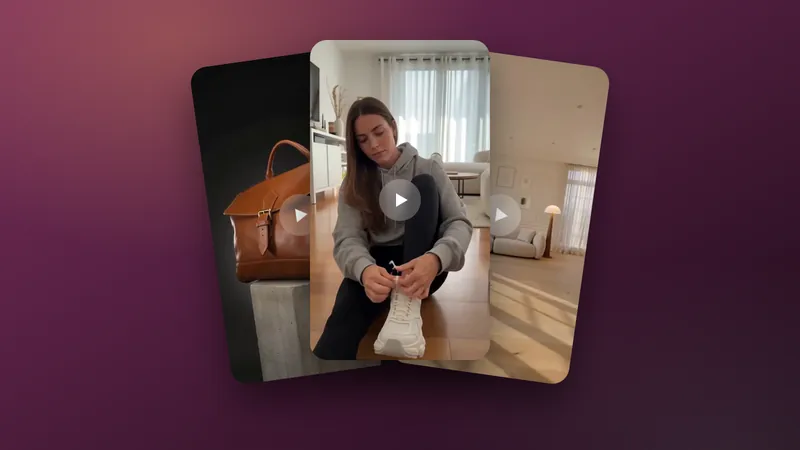
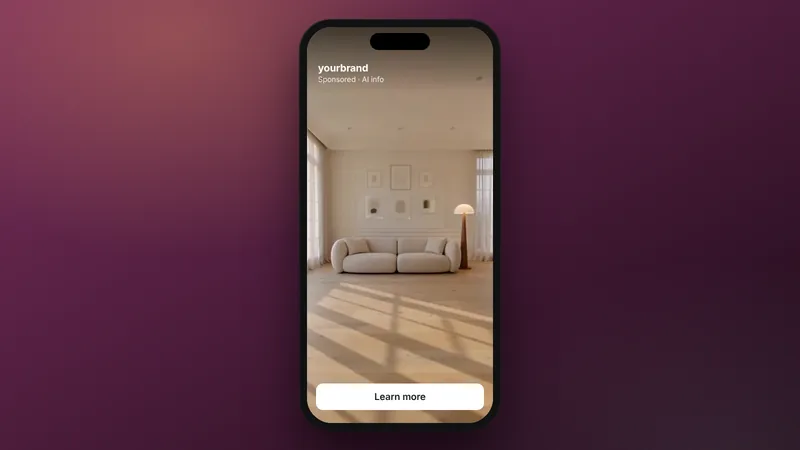
Are AI-generated ads allowed on Facebook and Instagram?
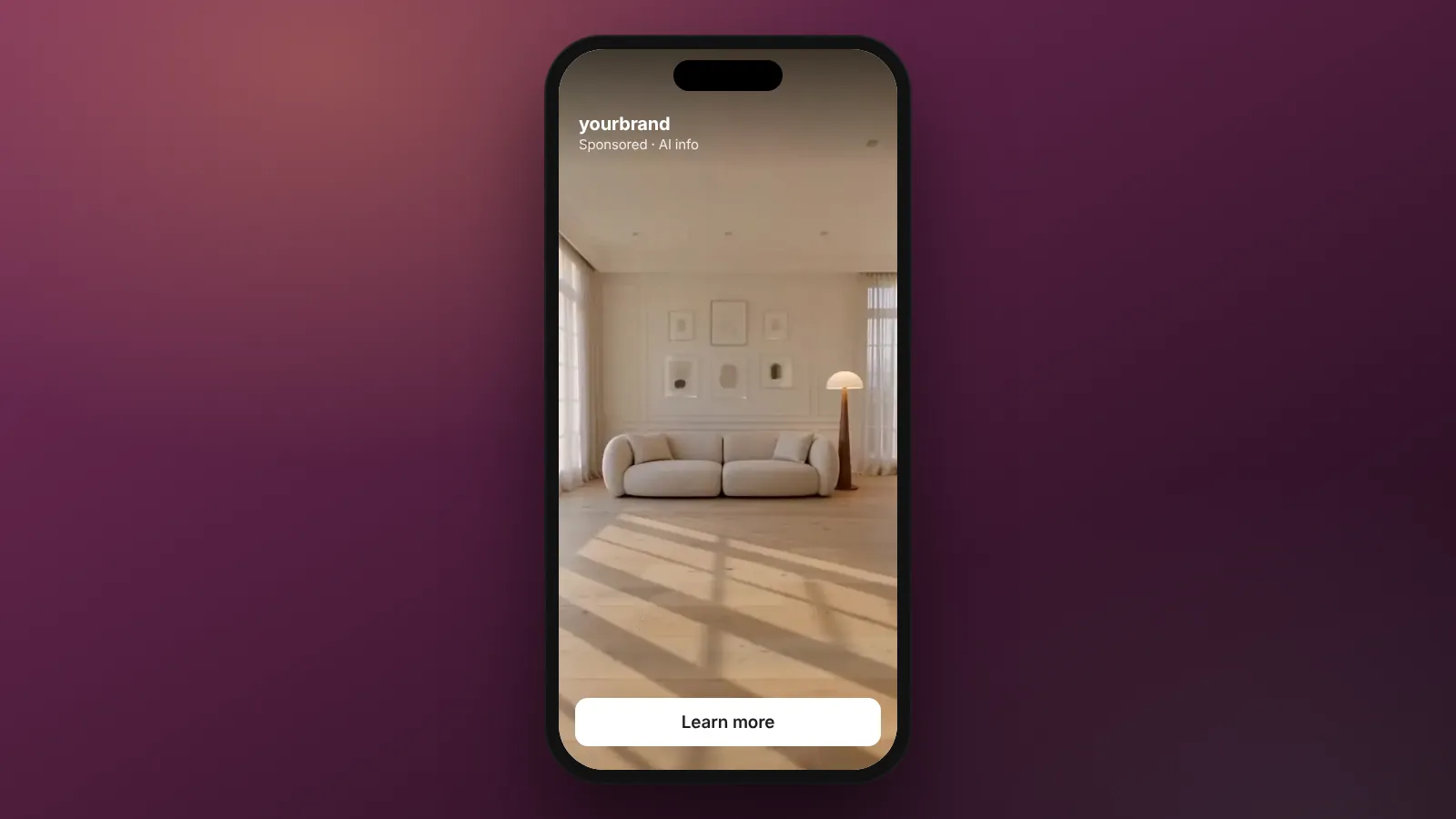
Short answer: In general, yes. Using AI to make an ad is not by itself a reason for rejection. AI-made ads are reviewed against the same Meta advertising standards as any other ad, so honesty, provable claims and genuine testimonials matter most. Disclosure rules for AI content change, so check Meta's current policies before launch.
Can I run ads made with AI on Facebook and Instagram?
In general, yes. What Meta reviews is what the ad shows and claims, not which tool made it.
AI-made images, video and copy go through the same ad review as any other creative. Meta's Advertising Standards apply to every ad, whoever or whatever made it. Policies change, so read the current version before you launch. We could not confirm Meta's exact AI disclosure wording for this update, so we have kept this guide general.
Will Meta label an AI-made ad?
It might. Disclosure rules for AI content can change, so check them each time and treat any AI label as a disclosure, not a penalty.
Before launch, check the Meta Business Help Centre for the current rules on AI-made or AI-edited content in ads. A sensible default is simple. If an ad shows a realistic person, place or event that was generated or heavily altered, assume disclosure is expected. Ads can still perform well with a disclosure when the offer and message are strong.
What gets AI ads rejected?
The same things that get any ad rejected, plus a few that AI makes easier to do by accident.
- Misleading or exaggerated claims about what a product does.
- Fake before-and-after images.
- Made-up customer reviews or testimonials.
- Generated people presented as real customers.
- A real person's face or voice used without permission.
- Text in the image that promises results you cannot prove.
Most of these are honesty problems, not technology problems. AI simply makes them faster to produce.
Can I use an AI actor as a customer?
No, not as a real customer. Do not present a generated person as someone who bought and used your product.
You can use an AI presenter or character to explain an offer. Frame it as a presenter, not as a genuine review. Our guide to AI UGC ads covers how to use this style without implying a real customer. This protects you from rejected ads and from losing trust.
Which uses of AI are low risk and which are high risk?
The risk rises as AI-made content gets closer to looking like real evidence. Use the table as a quick check.
| Use of AI | Risk level | Why |
|---|---|---|
| Copy variations and headlines | Low | Easy to check every claim before launch |
| Backgrounds and scenes around a real product | Low | The product itself stays accurate |
| Resizing and reformatting for Reels and Stories | Low | No change to what is shown |
| AI presenter clearly framed as a presenter | Medium | Fine if never presented as a customer |
| Realistic generated people in everyday scenes | Medium | May need disclosure; check current rules |
| Before-and-after or results imagery | High | Easily misleading; avoid unless real |
| Generated reviews or testimonials | High | Fake endorsements; do not use |
| Real person's likeness without consent | High | Permission and policy problems |
Why use AI for ad creative at all?
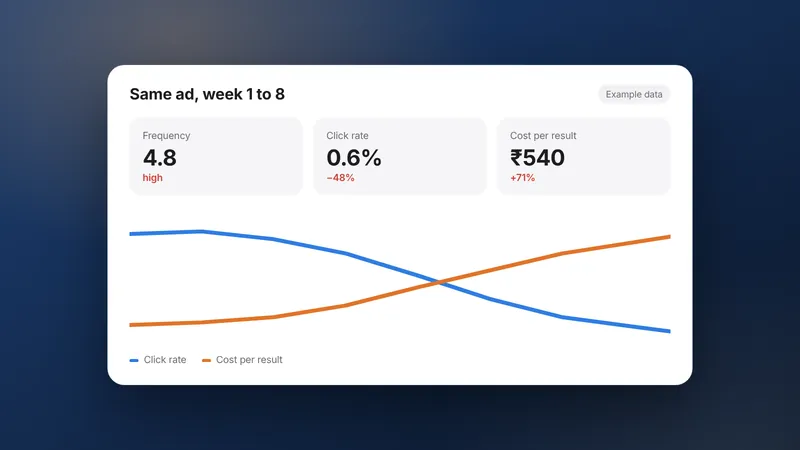
Speed and testing. Ads lose effect as people see the same creative again and again, so accounts do better with a steady flow of fresh versions.
AI makes it practical to produce many variations from one idea without a new shoot each time. Our guide to Meta ads creative fatigue explains why this matters.
Worked example (example numbers): A brand makes 10 AI-assisted versions of one ad idea.
It spends ₹1,000 on each version over one week, so ₹10,000 in total.
Three versions bring 4 leads each, a cost per lead of ₹250.
The other seven bring 1 lead each, a cost per lead of ₹1,000.
Total: 19 leads (3 × 4 + 7 × 1) for ₹10,000, about ₹526 per lead.
Next week it puts the same ₹10,000 into the three winners only.
If they held ₹250 per lead, that would be 40 leads.
In practice cost per lead may rise as spend grows, so the team keeps testing new versions.
These are example numbers, not benchmarks. The point is the method: test many versions cheaply, keep the winners, retire the rest. Give each version a fair, equal budget before you judge it, or the test will favour whichever ad happened to run first.
How should a brand use AI ads responsibly?
Keep the product real, the claims provable and the people honest. A short checklist helps.
- Show your real product accurately, with correct colours, size and features.
- Keep only claims you can prove with evidence.
- Do not invent reviews, results or customer stories.
- Follow the platform's current disclosure rules.
- Get written permission before using any real person's likeness or voice.
- Label AI-made creative as AI-made inside your own team, so nobody mistakes it for real footage later.
How do you check an AI ad before it goes live?
Have one person, not the person who made it, review every ad against a fixed list. Five minutes of checking can save a rejected ad or a complaint.
- Is the product shown exactly as a customer will receive it?
- Can we prove every claim in the text and the image?
- Does any generated person look like a real customer or a real public figure?
- Is there visible text with spelling mistakes or odd shapes, which AI images sometimes produce?
- Does the ad need a disclosure under the current platform rules?
If any answer is unclear, fix the ad first. It is cheaper than appealing a rejection.
Does WebMaxs make AI ads?
Yes. Our AI ad studio produces AI-assisted ad creative, and we run the campaigns too. We label AI-made creative as AI-made, show real products accurately and do not use fake testimonials.
If you want to test the approach, the Creative Sprint is 10 ready-to-run ads in 7 days for ₹24,999 ($490) one time. Monthly plans that include AI video ads are on our pricing page. We cannot promise any ad will be approved or perform well; we can promise to follow the rules as they stand.
Frequently asked questions
Do I have to tell customers that an ad was made with AI?
Check Meta's current disclosure rules first, because they change. Beyond the platform rules, be open when a realistic person or scene was generated. Hiding it can damage trust if people find out later.
Will AI-made ads perform worse than real photos?
Not necessarily. Performance depends mostly on the offer, the first few seconds and how well the ad fits the audience. Test AI versions against real footage and let your own results decide.
Can AI write my ad copy as well as the visuals?
Yes, and it is useful for producing many headline and caption options quickly. A person should still check every claim, price and promise. AI tools can state things that are not true about your product.
Can I put my real product into an AI-made background?
Yes, as long as the product itself is shown accurately. Do not change its size, colour, features or packaging in ways that mislead. A realistic lifestyle scene is fine; a fake result is not.
What happens if Meta rejects an AI ad?
You can edit the ad and resubmit it, or request a review if you think the decision was wrong. Read the rejection reason carefully first. Repeated rejections may cause wider problems for an ad account, so fix the cause rather than retrying the same ad.
Sources
Platform rules change. Check the official pages before you launch.
Want this done for your brand?
See how WebMaxs handles the AI Ad Studio, or tell us about your business and we will bring three ideas and a free sample ad to the call.