AI UGC ads explained: what they are and when they work
Short answer: AI UGC ads are short, creator-style videos where the presenter, voice or footage is made with AI. They work best for testing many hooks quickly and explaining simple products. They must never pose as real customer reviews, must show the product accurately, and should be disclosed as AI-made under each platform's rules.
What is an AI UGC ad?
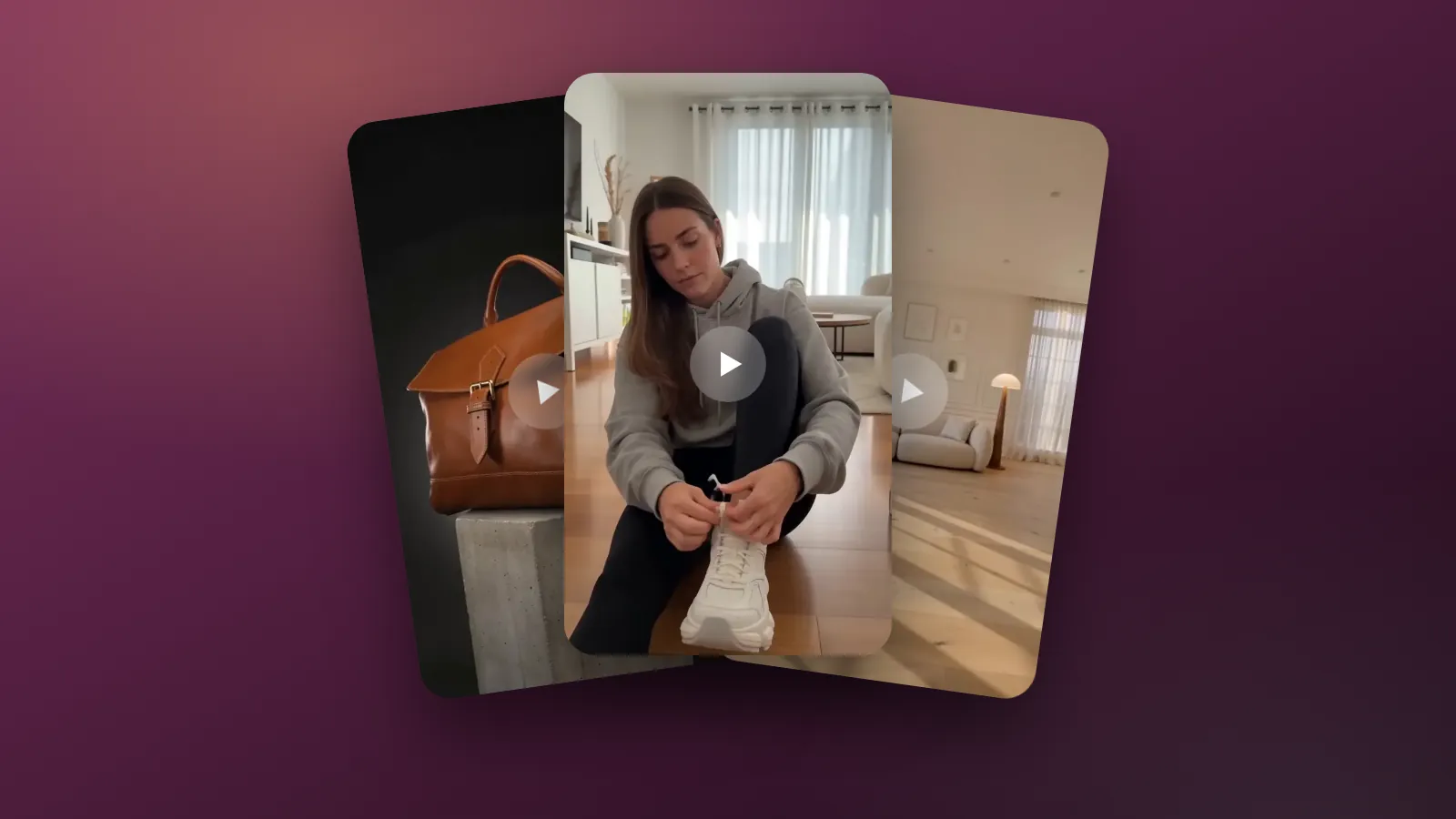
An AI UGC ad is a short video made to look like creator content, where the presenter, voice or footage is made with AI. UGC stands for user-generated content.
Real UGC is a customer or creator filming themselves with a phone. It feels casual and direct. AI UGC copies that style: a person talking to camera, a quick demo, handheld-looking shots and captions. The difference is that the person, the voice or the scene may not be real.
That difference is why honesty matters more here than in any other ad format.
How is AI UGC different from real UGC and studio ads?
Each format has a different job. AI UGC is fastest to change, real UGC carries genuine experience, and studio ads carry polish.
| Format | Who appears | Speed to make new versions | Best for | Main risk |
|---|---|---|---|---|
| AI UGC | An AI-made presenter or voice | Fast | Testing hooks and explaining simple products | Looking like a fake review |
| Real UGC | A real customer or paid creator | Slower | Genuine experience and social proof | Usage rights and consistency |
| Studio or brand film | Actors or staff, filmed on set | Slowest | Hero brand moments and launches | Cost and fewer versions |
Many brands use all three. AI versions find the message, real creators add trust, and a studio shoot handles the big moments.
When do AI UGC ads work well?
They work when the message is simple and you need many versions to find what lands. The product itself must be shown accurately.
Good fits include:
- Testing hooks. Ten openings for one offer, made in days instead of weeks.
- Explaining a simple product or service. A presenter walks through what it is and how to book.
- Offers with a clear action. A limited-time menu, a booking window, or a free consultation.
- Localising. The same script in more than one language, checked by native speakers.
- Filling gaps between shoots. Fresh versions while you plan your next real shoot.
AI UGC is a format for finding the right message. It is not a shortcut to trust.
When should you not use AI UGC?
Skip it when the ad depends on real experience or exact appearance. In those cases a real person or a real shoot is the honest choice.
- Results claims. Weight loss, skin, income or health outcomes need real evidence, not an AI face.
- Testimonials and reviews. A review must come from a real customer.
- Food, rooms and spaces that must look exactly right. Guests will compare the ad with what they get.
- Regulated categories. Finance, health and similar areas have extra rules. Get advice before you run anything.
- Brands built on a real founder or team. Swapping them for AI people can damage trust.
What are the honesty rules for AI UGC ads?
Never let an AI person pose as a real customer, never invent reviews, and always say the content is AI-made. These rules protect your buyers and your ad account.
Do not fake a testimonial
Lines such as "I tried this and it changed my life" imply a real experience. Do not put them in an AI presenter's mouth. Write the script as a presenter explaining the product instead.
Do not pretend an AI person is real
Do not name the AI presenter as a customer, give them a fake backstory, or add a fake review score. Call them a presenter or a character in your own records and your public answers.
Do not copy real people
Do not use a real person's face, name or voice without written permission. That includes celebrities, staff who have left, and other brands' creators.
Disclose AI use
Label AI-made content as AI-made, and follow each platform's disclosure settings. If someone asks in the comments, answer honestly.
Keep claims provable
Every claim in the script should be something you could show evidence for. AI makes it easy to write bold lines. It does not make them true.
How do platforms label AI-made ads?
Platforms have their own rules for disclosing AI content, and they change. Check the current advertising policies for each platform before you launch.
Our guide on whether AI-generated ads are allowed on Facebook and Instagram explains how labels work on Meta and what gets AI ads rejected. Keep a simple record of which parts of each ad are AI-made. It makes disclosure easy and helps if a reviewer asks.
How do you test AI UGC ads fairly?
Change one thing at a time, give each version a fair share of budget, and judge on cost per lead or sale, not views. Keep a proven ad running as your control.
Worked example (example numbers): A salon wants more bookings for a bridal package.
It makes 6 AI UGC ads with the same middle and end, but 6 different hooks.
It sets aside ₹18,000 of test spend, which is ₹3,000 per ad, paid from its own Meta ad account.
After the test, Hook A brings 12 leads, so its cost per lead is ₹3,000 ÷ 12 = ₹250.
Hook B brings 5 leads, so its cost per lead is ₹3,000 ÷ 5 = ₹600.
The salon keeps Hook A, retires the weakest hooks, and briefs a real stylist to film Hook A for a longer-running version.
These are example numbers only, not a typical result or a benchmark.
For how many new ads to plan each month, see how many ad creatives a brand needs each month.
What does it cost to make AI UGC ads?
Cost depends on how many versions you need, how realistic the presenter must be, languages and revisions. Agencies publish their own ranges for AI video work in India, and those ranges differ widely.
Examples of published guides are The Impulse Digital's 2026 guide to AI video production cost and 1st December's guide to AI ad film cost. Treat any range as one agency's view, and check what it includes (as of October 2026). Our post on AI video ad costs in India lists the questions to ask.
WebMaxs makes AI UGC and other AI video ads in the AI Ad Studio. As of October 2026, the Creative Sprint is $490 or ₹24,999 for 10 ready-to-run ads in 7 days. The Launch Growth plan includes 8 AI video ads a month. Full details are on the pricing page. Ad spend is always separate.
Frequently asked questions
Can I use an AI presenter in Hindi or a regional language?
Many teams make regional versions of the same script. Quality varies by tool and language, so have a native speaker check the words, tone and lip sync before anything runs.
Can I turn a real customer's review into an AI video?
Only with that customer's clear, written permission, and only using their real words. Do not change what they said or add claims they did not make. If in doubt, film the real person instead.
Will people notice that the presenter is AI?
Some will, and that is fine if you have been honest. Problems start when an ad hides it or claims the person is a real customer. Write the script for a presenter, not for a fake reviewer.
Do AI UGC ads replace real creators?
No. They are a fast way to test ideas. Many brands use AI versions to find the winning hook, then brief a real creator on that hook for a longer-running ad.
What should the first AI UGC test include?
One product, one offer and several hooks. Keep the middle and the end of the ad the same, so the test tells you which opening works best.
Sources
- The Impulse Digital: AI video production cost in India (2026 guide)
- 1st December: AI ad film cost in India
Platform rules change. Check the official pages before you launch.
Want this done for your brand?
See how WebMaxs handles the AI Ad Studio, or tell us about your business and we will bring three ideas and a free sample ad to the call.