A 30-day content calendar for a restaurant (with a free template)
Short answer: A good restaurant content calendar mixes five pillars: food, people, place, offers and guests. Plan around your slowest days and your events, batch-shoot once a week, and repost guest content only with permission. Copy the 4-week template below, fill in your own dishes and dates, and review it every Sunday.
Why does a restaurant need a content calendar?
A calendar stops you posting only when you remember. It turns social media from a daily worry into a weekly plan.
It also helps you post with a purpose. Each post can support a slow day, an event, a new dish or your reviews. Without a plan, most restaurant feeds become a stream of random food photos.
What content pillars should a restaurant use?
Use five pillars and rotate them. Each pillar answers a different question a guest has before visiting.
| Pillar | Guest question it answers | Example posts |
|---|---|---|
| Food | What will I eat? | Plating Reel, close-up of a signature dish, new menu item |
| People | Who will look after me? | Chef at work, staff favourite dish, a server's day |
| Place | What is it like there? | Seating tour, lighting at night, parking and entrance |
| Offers | Why go now? | Weekday lunch, happy hour, set menu, festive booking |
| Guests | Do people like it? | Reposted guest Reels and photos, reviews, birthday tables |
Aim for a balance across the month. Too many offers and you look like a discount shop. Too few and nobody has a reason to book this week.
What does a 30-day restaurant calendar look like?
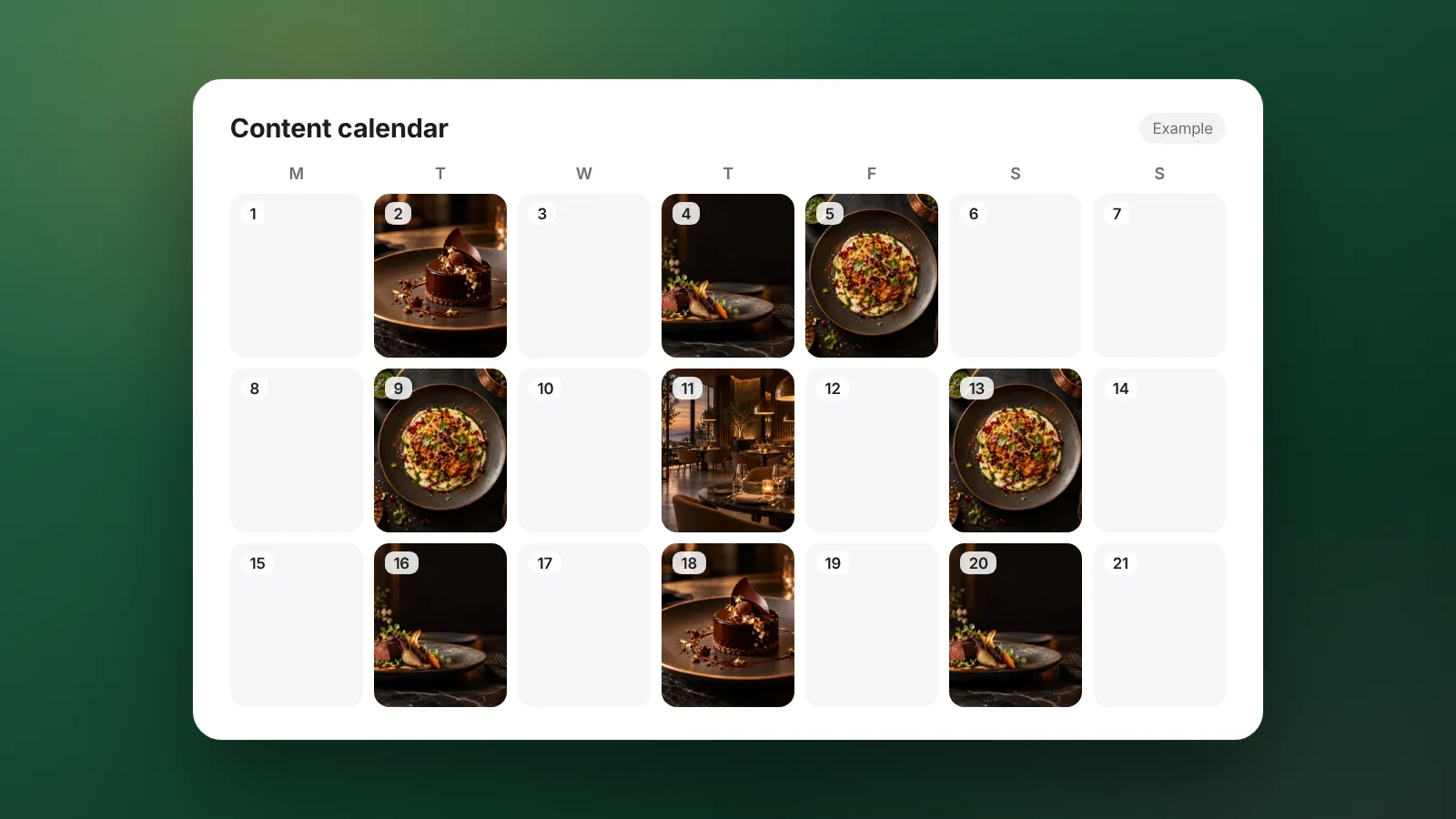
Here is the free template. Copy the table into a spreadsheet or document and replace each idea with your own dish, offer or date.
| Week | Mon | Tue | Wed | Thu | Fri | Sat | Sun |
|---|---|---|---|---|---|---|---|
| 1 | Food: signature dish Reel | Offer: slow-day push | People: meet the chef | Place: seating tour | Offer: weekend booking reminder | Guests: repost a guest Reel | Food: Sunday special |
| 2 | People: staff favourite | Offer: slow-day push | Food: how it is made | Guests: review card | Event: announce this month's event | Place: night lighting | Guests: repost a family table |
| 3 | Food: new or seasonal dish | Offer: slow-day push | Place: parking and entrance | People: kitchen behind the pass | Event: reminder, seats left | Event: live Stories on the night | Guests: thank-you post |
| 4 | Food: dessert or drink | Offer: slow-day push | Guests: answer a common question | People: a regular's story | Offer: payday or month-end offer | Food: crowd favourite | Plan: poll for next month's dish |
| Extra days | Day 29: best Reel of the month, reshared | Day 30: next month teaser |
That gives one post a day for 30 days. If daily is too much, post on four days only: Tuesday, Thursday, Friday and Sunday.
Stories can run every day alongside posts. Use them for the day's specials, sold-out dishes, table availability and quick polls.
How do you push your slow days?
Find your two slowest days from your own sales or booking data, then give them a weekly offer and a fixed post. The template uses Tuesday as an example; swap in your own days.
Good slow-day pushes are simple and easy to redeem:
- A set lunch or thali at a clear price.
- A "bring a friend" offer on one dish.
- A quiz, live music or open mic night.
- A members' or regulars' night announced on WhatsApp.
Post the offer the day before and the morning of. Ask staff to note how many people mention it, so you know if it works.
Worked example (example numbers): A 50-seat café usually serves about 40 covers on a Tuesday.
It posts a Tuesday Reel on Monday evening and a Story on Tuesday morning for a ₹399 lunch combo.
Staff count 24 guests who order the combo and mention the post.
That is 24 × ₹399 = ₹9,576 in tracked combo sales from two pieces of content.
If the café also spends ₹1,500 promoting the Reel locally, the ad cost per tracked guest is ₹1,500 ÷ 24 = ₹62.50.
Treat these as example numbers. Your own results will depend on location, menu and the offer.
How should you plan around events?
Give each event three posts: an announcement, a reminder and a recap. Start at least two weeks ahead for anything that needs bookings.
The announcement says what, when, the price and how to book. The reminder creates urgency with seats left or the final menu. The recap shows the night itself and becomes proof for the next event.
Add festivals, match nights and long weekends to the calendar early. They need a menu, a shoot and posts, all planned together.
How do you repost guest content the right way?
Ask first, every time, and credit the guest. A tag is not permission.
A simple routine:
- Find tagged posts and Stories from guests.
- Send a short message asking if you may share it on your page.
- Wait for a clear yes before reposting.
- Credit them by handle in the caption.
- Keep a note of who agreed and for what.
If you want to use guest content in paid ads, ask for that separately and in writing. Organic sharing and advertising are different uses.
The same care applies to messages. If you plan to send offers on WhatsApp, collect opt-in first, as Meta explains in its guide to getting WhatsApp opt-in. The WhatsApp Business Platform is built for businesses that manage many such conversations.
How does social media connect to local search?
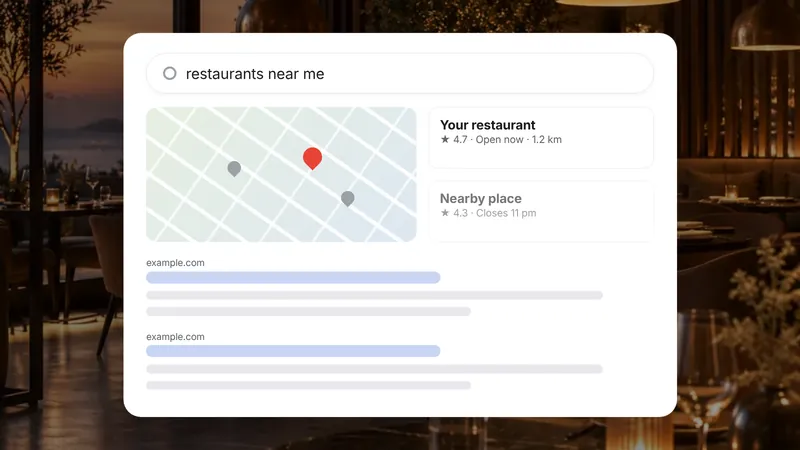
People who see your post often search your name next. Your Google listing must match what they just saw.
Keep hours, menu links and photos current, and add your best new dish photos there too. Google Business Profile Help covers how to update your profile. Our local SEO checklist for restaurants in India walks through the rest.
When an offer works organically, you can test it as a paid local ad. Our guide to Meta ads for restaurants in India explains how to set that up.
How do you know if the calendar is working?
Review every Sunday for ten minutes. Look at which posts led to action, not just likes.
Useful signals include saves, shares, profile visits, direction taps, calls, WhatsApp messages and bookings. Above all, track the guests who mention a post at the table. Drop formats that never lead to action, and repeat the ones that do.
Can someone run the calendar for you?
Yes. Many restaurants hand it to an agency once the pillars and slow days are clear. See how we work with restaurants, cafés and bars.
WebMaxs social media Essentials covers 2 platforms, 16 posts and Reels a month and Meta ads managed, for ₹50,000 a month. Full details are on our pricing page.
Frequently asked questions
Can I use the same content on Instagram and Facebook?
Yes, with small changes. Adjust captions, crop for each format and check that links and tags work on both. Reusing good content saves time and keeps both pages active.
What if we have no time to shoot every day?
Batch-shoot once a week during a quiet hour. Film several dishes, a few staff moments and some room shots in one session. That can cover most of a week's content in one session.
Should we show prices in posts?
Show prices for offers and set menus, because a clear price helps people decide. For regular dishes it is optional. Whatever you show must match the menu and the bill, or it will cause complaints.
How do we handle a negative comment on a post?
Reply politely and publicly once, then move the conversation to a direct message or phone call. Do not argue or delete fair criticism. Fix the underlying problem and, where it helps, say what you changed.
Do we need a separate calendar for festivals?
No. Add festival dates into the same calendar at least three weeks ahead. Plan the menu, the shoot and the posts together, and swap them in for regular pillar posts that week.
Sources
- Google: Google Business Profile Help
- Meta for Developers: Getting opt-in for WhatsApp
- WhatsApp: WhatsApp Business Platform
Platform rules change. Check the official pages before you launch.
Want this done for your brand?
See how WebMaxs handles social media management, or tell us about your business and we will bring three ideas and a free sample ad to the call.