How do large Instagram pages earn from brand deals?
Short answer: Large pages earn mainly from sponsored posts and longer brand partnerships, plus affiliate links and their own products. Brands pay for access to an engaged audience that fits their customers, so engagement, audience fit, reliable reporting and a clear paid-partnership label matter more than follower count alone.
How do big Instagram pages make money?
The main routes are sponsored posts and Stories, longer brand partnerships, affiliate links, and selling their own products or services. Pages in a clear niche usually find it easier to attract brands that fit.
For pages that publish rather than sell, sponsored content is the most direct route. Each route suits a different kind of page.
| Earning route | How the page earns | What the brand gets | Effort for the page |
|---|---|---|---|
| Single sponsored post | A fee per post, Reel or Story | Reach to an engaged audience | Low to medium |
| Longer partnership | A fee for several posts over months | Repeated reach and familiarity | Medium |
| Affiliate links | A share of sales from tracked links | Pays only when people buy | Low per post, uncertain income |
| Own products or services | Margin on what the page sells | Not applicable | High |
What do brands look for?
Brands look for an audience that matches their customers and actually pays attention. Follower count alone tells them little.
- Engagement: how many followers actually watch, like, comment, save and share.
- Audience fit: whether the followers are the people the brand wants to reach, by place, age and interest.
- Content quality: a consistent, professional look.
- Track record: clear results from past partnerships.
- Brand safety: content that is accurate and does not embarrass the advertiser.
You can check a page's engagement rate quickly with our Instagram engagement calculator.
Why can a smaller page be worth more to a brand?
Because brands pay for attention and fit, not followers. A smaller page with a highly engaged audience can deliver more useful results per rupee.
Worked example (example numbers): A brand compares two pages, each quoting ₹40,000 for one Reel.
Page A has 8,00,000 followers and averages 12,000 interactions a post, an engagement rate of 1.5%.
Page B has 5,00,000 followers and averages 20,000 interactions a post, an engagement rate of 4%.
Cost per interaction: Page A is about ₹3.33 (₹40,000 ÷ 12,000) and Page B is ₹2 (₹40,000 ÷ 20,000).
With tracked links, Page A brings 600 clicks and Page B brings 1,000 clicks.
Cost per click: Page A is about ₹67 and Page B is ₹40.
Page B is the better buy for this brand, despite having fewer followers.
These are example numbers, not market rates. Real prices depend on the page, the format and the audience.
How is a deal usually structured?
Most deals follow the same five steps: brief, creative, approval, publishing and a report.
- The brand sends a brief with the product, audience, dates and goal.
- The page proposes a price for a set of deliverables, such as posts, Reels or Stories.
- The brand approves the creative, caption and link before anything goes live.
- The post goes live on the agreed date with a clear disclosure.
- The page sends a report with reach, engagement and tracked-link clicks.
Longer partnerships often include several posts over a few months. Agree in writing who owns the content and whether the brand can reuse it in its own ads.
Do sponsored posts need to be labelled?
Yes. Paid posts should be clearly labelled as paid, both for the audience's trust and to follow advertising rules.
Use the platform's paid-partnership label wherever it is offered. Also put a clear disclosure such as "Ad" or "Paid partnership" at the start of the caption, not hidden in hashtags. Check the current branded content rules in the Instagram Help Centre before each campaign, because platform tools change.
In India, the Advertising Standards Council of India (ASCI) publishes guidelines for influencer advertising. Read the current version before you post. Other countries have their own rules, so brands running campaigns abroad should check those too. Labelling protects the page, the brand and the audience.
What mistakes slow down a page's earnings?
Most are avoidable with a little process.
- Posting content without sources or permission to use the images.
- Working with brands that do not fit the audience.
- Having no media kit, so brands cannot see numbers quickly.
- Posting irregularly, which can lower engagement.
- Hiding or skipping the paid-partnership disclosure.
- Buying followers or engagement, which breaks trust with brands and the audience.
Consistent, original content does the most for long-term earnings. Many pages rely on Reels, and our guide to Instagram Reels strategy for hospitality covers the basics of planning Reels.
What is a media kit?
A short document that shows a page's audience, reach, engagement, past partnerships and rates. It saves time for both sides and makes a page look serious.
A useful media kit includes:
- Follower numbers and audience location, age and gender from the platform's insights.
- Average reach and engagement for recent posts and Reels.
- Examples of past sponsored posts, with permission.
- The formats on offer and how pricing works.
- A contact route and typical turnaround time.
Update it every month or two. Brands notice stale numbers.
Should a page owner manage deals alone or get help?
Small pages often manage deals alone. As a page grows, finding brands, pricing, contracts and reports can take more time than making content.
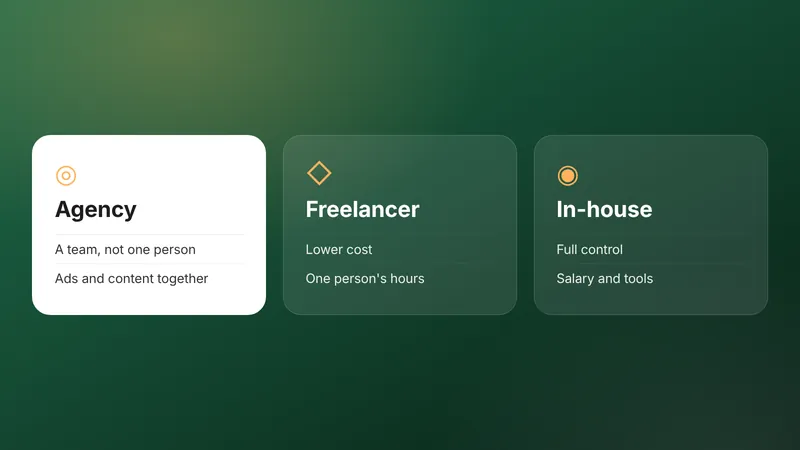
Some owners hire a manager or agency for this, much like brands choose between an agency, a freelancer or in-house staff. Our guide on who should run your Instagram walks through those trade-offs.
How does WebMaxs Media help?
WebMaxs Media designs, runs and monetises Instagram and Facebook pages with 500K+ followers. It connects brands to those audiences with clearly labelled sponsored posts.
For brands, our sponsored placements page explains how a deal works. You approve every post, each one uses tracked links, and you get one report for the campaign. Brands that want their own pages and ads managed can see our monthly plans on the pricing page.
Frequently asked questions
How many followers does a page need before brands pay?
There is no fixed number. Brands look at engagement and audience fit as much as size. A smaller page in a clear niche can be more useful to the right brand than a large general one.
Should a page accept every brand that offers money?
No. Promoting products that do not suit the audience lowers trust and engagement, which lowers future earnings. Decline deals you would not be comfortable explaining to your followers.
Who writes the caption on a sponsored post?
Usually the page writes it in its own voice, and the brand approves it. The brand may supply key facts, links and words it must avoid. The disclosure must stay clear and upfront, whoever writes the rest.
How should a page share its numbers with a brand?
Use screenshots or exports from the platform's own insights, with dates. Show reach, engagement and audience location and age for recent posts. Never edit the numbers; if a brand asks for live proof, be ready to show it.
Can a Facebook page earn the same way as an Instagram page?
The same principles apply: an engaged audience, a clear niche and honest labelling. Brands often buy placements across both, especially when the audiences differ. Each platform's own branded content rules still apply.
Sources
Platform rules change. Check the official pages before you launch.
Want this done for your brand?
See how WebMaxs handles WebMaxs Media, or tell us about your business and we will bring three ideas and a free sample ad to the call.