Agency, freelancer or in-house: who should run your Instagram?
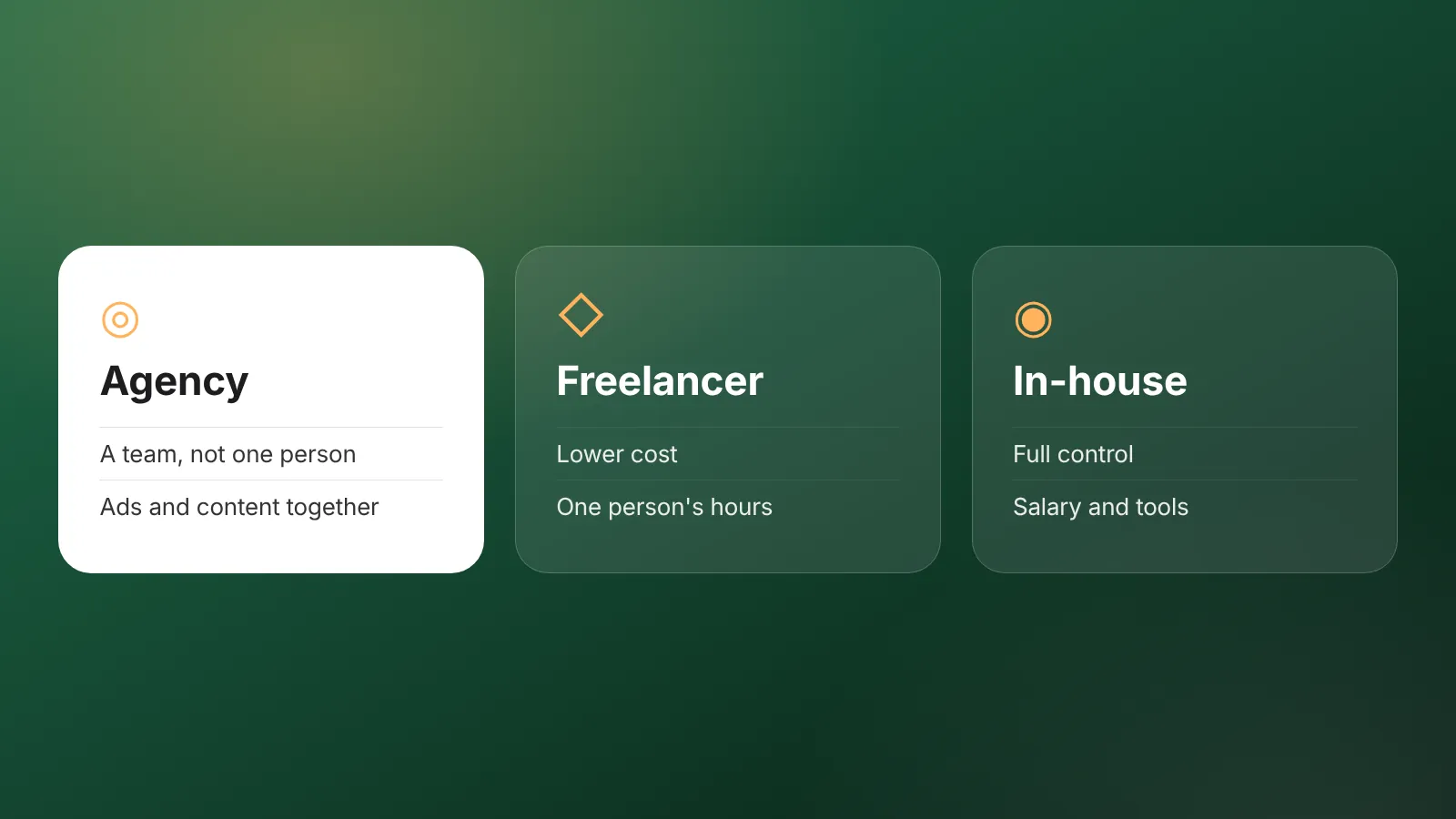
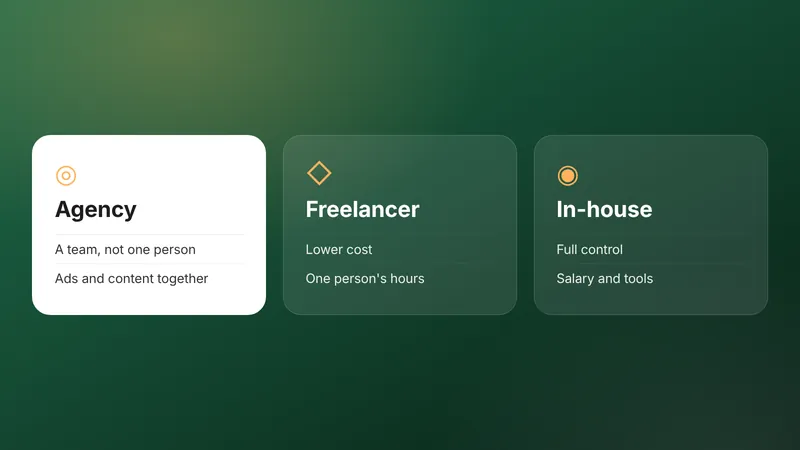
Short answer: A freelancer suits a small, simple page with a clear, limited job. An in-house hire suits a brand with daily content and reply needs. An agency suits a business that wants strategy, design, video, ads and reporting from one team without managing several people. Many brands mix two of these.
What does running an Instagram page actually involve?
More than posting. A page that brings in business usually needs five or six different skills each month.
- Strategy: what to post, for whom, and why.
- Design and video: posts, carousels, Reels and Stories.
- Copy: captions, hooks and replies in your brand's voice.
- Community: answering comments and messages quickly.
- Paid ads: campaigns, budgets, audiences and tracking.
- Reporting: what worked, what did not and what changes next.
List these before you decide who to hire. The right choice is the one that covers the skills you need with the least management from you.
When does a freelancer make sense?
When you need a clear, limited job done well. Examples are a content calendar, a set of post designs or a few edited videos.
Freelancers are often good value for focused work. The trade-off is that you manage them, and one person can only do so much. If you need design, video and ads, you may end up managing two or three freelancers.
When should you hire in-house?
When your page needs daily attention, quick replies and close knowledge of the product. You also need the budget for a full salary plus tools.
The strength of an in-house person is closeness. They hear customer questions first and can film behind-the-scenes content any day. The risk is that one person has to cover design, video, copy, ads and analytics, which few people can do well.
When is an agency the better choice?
When you want several skills at once without recruiting and managing each one. You pay a monthly fee and get a team and a process.
Agencies also keep up with new platforms and ad formats across many accounts. For example, ChatGPT ads launched in India in late August 2026, OpenAI's second-largest market, with 50+ brands, according to Outlook Business. A single in-house hire may not have time to learn each new channel.
The downsides are real too. An agency is less close to your product day to day, and a bad fit costs time. That is why accounts in your name, a short notice period and a clear monthly report matter.
How do the three options compare?
Each option wins on different things. The table sums up the usual trade-offs.
| Factor | Freelancer | In-house hire | Agency |
|---|---|---|---|
| Range of skills | One or two | One person's skills | Several, as a team |
| Daily presence | Low | High | Medium, set by the plan |
| Your management time | Medium to high | High (you are the manager) | Low to medium |
| Cost shape | Per project or monthly | Salary, tools and overheads | Monthly fee |
| Cover for leave or illness | None | Limited | Usually built in |
| Paid ads expertise | Varies | Varies | Usually included |
| Easy to change | Yes | Harder (notice, hiring) | Yes, with short notice |
What are the hidden costs of each option?
The biggest hidden cost is your own time. Price each option including the hours you will spend briefing, checking and managing.
Worked example (example numbers): A café owner values their own time at ₹1,500 an hour.
Option 1: a designer at ₹25,000 plus an ads freelancer at ₹20,000, so ₹45,000 a month.
Managing two freelancers takes the owner 12 hours, worth ₹18,000.
Real monthly cost: ₹63,000 (₹45,000 + ₹18,000).
Option 2: an in-house hire at ₹40,000 salary plus ₹5,000 for tools, so ₹45,000.
The owner spends 8 hours a month managing, worth ₹12,000.
Real monthly cost: ₹57,000, but nobody covers paid ads.
Option 3: an agency at ₹75,000 including content and ads.
The owner spends 3 hours on calls and approvals, worth ₹4,500.
Real monthly cost: ₹79,500.
Ad spend is extra in all three cases and goes to the platform.
These are example numbers, not market rates. The lesson is to compare like with like. Option 2 looks cheaper but leaves out ads. Option 3 costs more but covers more skills and needs the least management.
Can you mix them?
Yes, and many brands do. Mixing lets you keep closeness in-house while buying skills you do not have.
A common mix is an in-house person for daily posting and replies, with an agency for ad creative, paid campaigns and monthly reporting. Another is an agency for strategy and ads, with a freelance photographer for on-site shoots. Our comparison of a performance marketing agency vs in-house in India looks at the same choice for paid ads.
Who should handle messages and WhatsApp follow-up?
Whoever can reply fastest and knows the product best. For most small brands, that is someone in-house, supported by automation.
Many Instagram enquiries move to WhatsApp. Brands with a high volume of messages may use the WhatsApp Business Platform and connect it to a shared inbox or CRM. If you plan to send follow-up messages, get the customer's opt-in first. Meta's guide to getting WhatsApp opt-in explains what that involves. Our WhatsApp automation service sets up this kind of follow-up.
How do you choose?
Work through four steps, in this order.
- List the work that needs doing each month.
- Count how many different skills it needs.
- Decide how much time you can spend managing people.
- Pick the option that covers the skills with the least management from you.
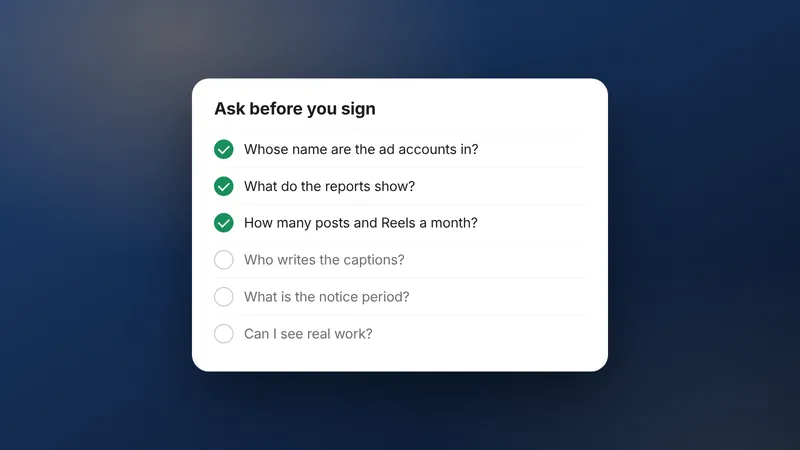
If you lean towards an agency, read our questions to ask before hiring a social media agency first. If you want to see how your page performs today, try the Instagram engagement calculator.
WebMaxs is an agency for social media, paid ads, AI ad creative, SEO and websites, with one team and one point of contact. Our social media service covers content, Reels and community. Monthly plans start at ₹50,000 ($990) for 2 platforms and 16 posts and Reels, with Meta ads managed; see pricing for the rest.
Frequently asked questions
Who should own the Instagram account if someone else runs it?
Your business, always. Give freelancers and agencies access through Meta's business tools rather than sharing your password. If they leave, you remove their access and keep everything.
How long should I try an option before switching?
Give any new person or team about three months, with clear monthly goals. The first month is mostly set-up and learning your brand. If the reports show no progress against the goals by month three, have an honest conversation.
Can one freelancer handle both content and paid ads?
Some can, but it is less common than it sounds. Content and paid ads need different skills and daily habits. Ask to see examples of both before you hand over both jobs.
Is it risky to depend on a single freelancer?
Yes, a little. Illness, holidays or a better-paid project can leave your page quiet. Keep your own copies of brand files and passwords, and agree a simple handover plan at the start.
Does an agency post on my page every day?
That depends on the plan you buy. Most plans set a fixed number of posts and Reels each month. If you need daily posting and instant replies, an in-house person or a mixed set-up may suit you better.
Sources
- WhatsApp: WhatsApp Business Platform
- Meta for Developers: Getting opt-in for WhatsApp
- Outlook Business: OpenAI rolls out ChatGPT ads in India, its second-largest market (2026)
Platform rules change. Check the official pages before you launch.
Want this done for your brand?
See how WebMaxs handles social media management, or tell us about your business and we will bring three ideas and a free sample ad to the call.