ChatGPT ads vs Google ads: where should a small business spend first?
Short answer: Most small businesses should fund Google Ads first, because it is mature, well measured and catches people searching to buy. Test ChatGPT ads second, with a small fixed budget, once your tracking works. ChatGPT ads are new in 2026, so treat them as an experiment beside proven channels, not a replacement.
What is the real difference between ChatGPT ads and Google Ads?
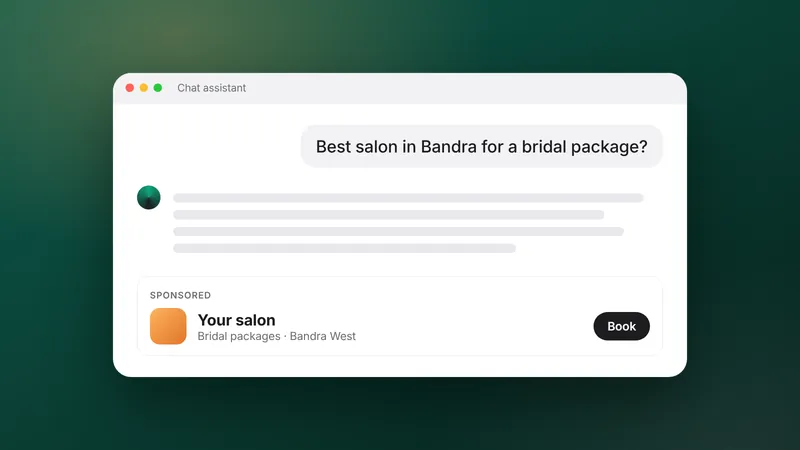
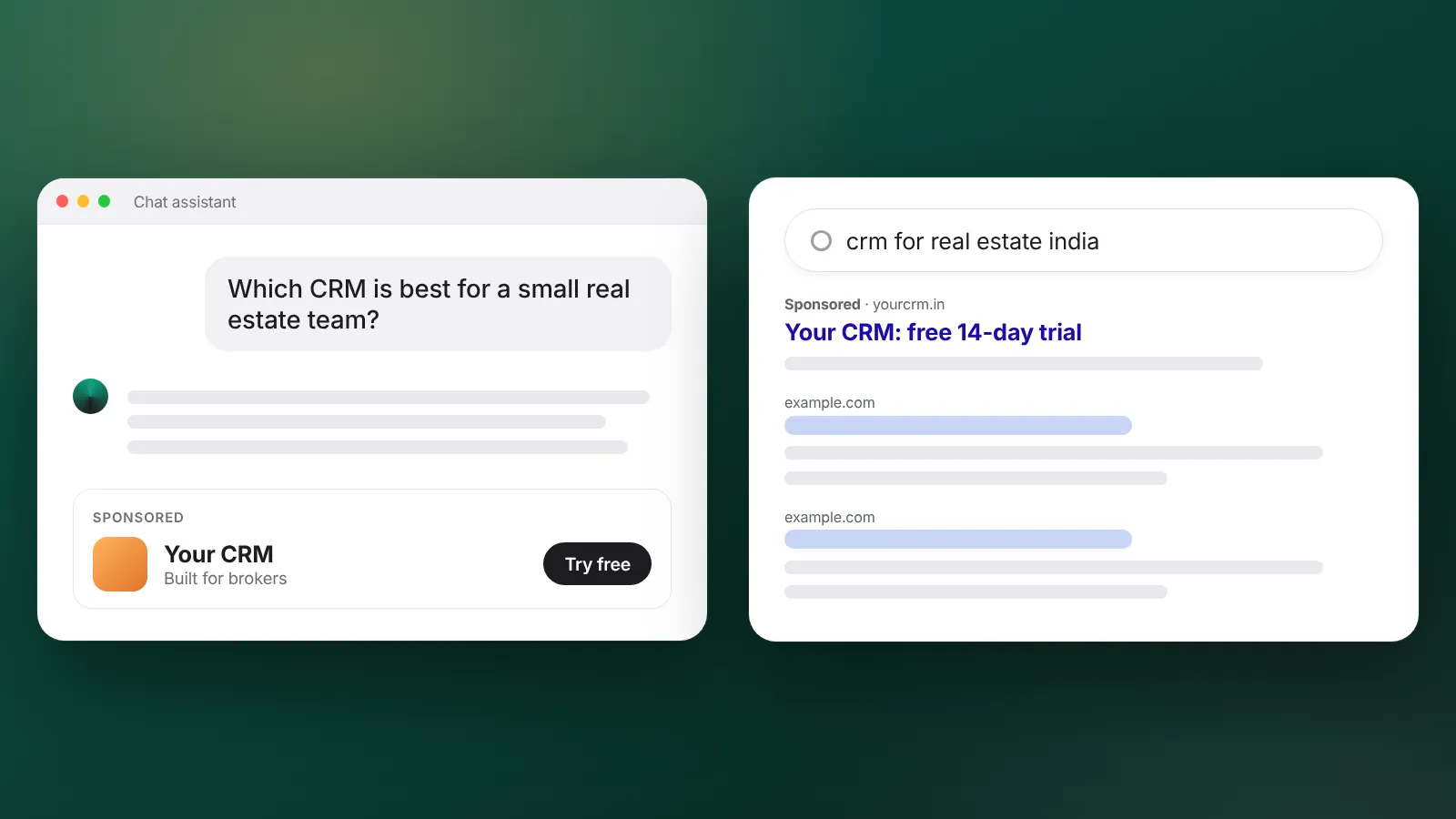
Google Ads shows ads when people search or browse across Google's network. ChatGPT ads show labelled sponsored placements below ChatGPT's answers, as of October 2026.
The difference is the moment. On Google, someone types a short query like "dentist near me" and scans results. In ChatGPT, someone often asks a longer question and reads an answer. Your ad appears after that answer, per OpenAI's announcement.
Google Ads has been running for more than twenty years. ChatGPT ads opened to Indian self-serve advertisers on 4 September 2026, as Manifest reported. That gap in age explains most of the other differences.
How do the two compare side by side?
Google Ads is broader and better understood. ChatGPT ads are narrower and newer, with fewer tools so far.
| Google Ads | ChatGPT ads (as of Oct 2026) | |
|---|---|---|
| Buyer intent | Short searches, often ready to buy or call | Longer questions, often researching or comparing |
| Where ads show | Search results, Maps, YouTube, partner sites and apps | Below ChatGPT's answers, for adult Free and Go users |
| Formats | Text, image, video and shopping formats | Labelled sponsored placements |
| Buying models | Several bidding options, including cost per click | CPM, CPC and conversion-optimised CPC |
| Maturity | Many years of tools, guides and specialists | New in 2026, tools still developing |
| Tracking | Mature conversion tracking and analytics links | Newer; use UTM tags and your own analytics as a base |
| Minimum budget | Set your own; check your account | ₹725 a day in India |
| Who is excluded | Reach is broad across Google's network | Plus, Pro and Enterprise users see no ads |
The buying models come from exchange4media, which also calls India a price test. Expect ChatGPT ad prices to change while that test runs.
Which channel catches buyers closer to the sale?
Google search usually catches people closer to the sale. Someone typing "AC repair Andheri" wants a phone number now.
ChatGPT conversations tend to sit earlier in the decision. People ask what to look for, which option suits them, or how to compare choices. That can still produce good leads. It often needs a page that helps people decide, rather than one that only asks them to buy.
This is a general pattern, not a rule. Some ChatGPT users will be ready to act, and some Google searches are pure research.
Where should a small business spend first?
If you have no paid ads yet, start with Google search. It is the safer first rupee for most local and service businesses.
Here is a simple order by situation:
- Local service with urgent demand (repairs, clinics, salons): Google search first. Add ChatGPT ads later as a test.
- Considered purchase (hotels, real estate, courses, software): Google search first, then a small ChatGPT ads test fairly soon. These buyers ask a lot of questions.
- Already spending well on Google and Meta: a ChatGPT ads test is a sensible next channel. Keep it to a fixed share of budget.
- Very small budget, under a few hundred rupees a day: pick one channel only. Splitting thin budgets makes every test inconclusive.
- Audience mostly paid ChatGPT subscribers (some B2B buyers): be cautious. Plus, Pro and Enterprise users do not see ads.
For a visual, social-first business like a café, Meta may matter more than either. Our post on Meta ads for restaurants in India covers that route.
How should you split a test budget between them?
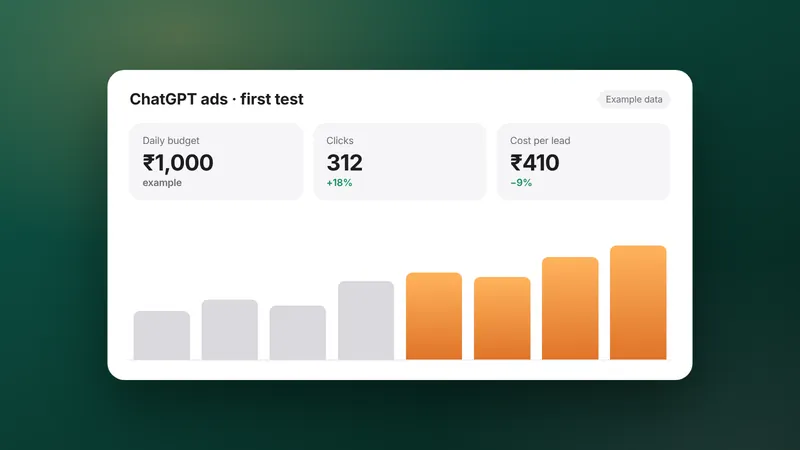
Keep your proven channel funded and give the new one a fixed, small share. Then compare both on cost per lead after a set period.
Worked example (example numbers): A coaching institute spends ₹60,000 a month on Google search.
It keeps Google at ₹60,000 and adds ChatGPT ads at the India minimum of ₹725 a day.
Over 30 days that is ₹21,750, so total spend becomes ₹81,750.
For example, if Google brings 80 leads, its cost per lead is ₹750.
If ChatGPT ads bring 20 leads, their cost per lead is ₹1,087.50.
The institute keeps testing new copy for a second month before deciding.
These are example numbers only, not benchmarks for either platform.
Notice that the test does not cut Google. Taking money from a working channel to fund an experiment can hide what really changed.
The free ad budget calculator helps you run the same maths with your own numbers.
How do you measure both fairly?
Use one definition of a lead and one place to count it. Platform dashboards each count in their own way, so your own analytics is the referee.
A practical setup:
- Add UTM tags to every ad link, with a clear source such as "chatgpt" or "google".
- Send both to landing pages that record the same form or WhatsApp event.
- Check leads in your CRM or a simple sheet, not only in each ad dashboard.
- Compare cost per lead and lead quality after the same number of days.
Lead quality matters as much as cost. Ask your sales team which leads actually booked, visited or paid.
What are the risks of moving early on ChatGPT ads?
The main risks are thin data, changing prices and fewer tools. None of these is a reason to avoid a test, but they are reasons to keep it small.
- Few benchmarks: you cannot easily tell whether your results are good or poor.
- Price changes: India is described as a price test, so costs may shift.
- Smaller audience: only adult Free and Go users see ads.
- Learning curve: writing for an answer-style placement is a new skill.
The upside of early testing is learning while fewer competitors are present. Just do not bet the month's leads on it. CNBC reported ChatGPT ads in 89 countries as of 21 October 2026, so the channel is expanding. It is worth understanding, carefully.
How does WebMaxs handle the two channels?
Google Ads management is part of the WebMaxs Launch Growth plan. ChatGPT ads management can be added to any monthly plan.
Both are reported the same way, in leads and cost per lead. Ad spend is always separate and paid by you, directly to each platform. Plan prices are on the pricing page. For the basics of the new channel, start with what ChatGPT ads are and how they work in India.
Frequently asked questions
Can I run ChatGPT ads and Google Ads at the same time?
Yes, and many businesses will. The key is to count leads the same way in both, so you compare like with like. Tag every ad link with UTM parameters and judge both on cost per lead.
Will ChatGPT ads replace Google search ads?
Nobody can say yet. ChatGPT ads opened to Indian self-serve advertisers only in September 2026. Watch your own numbers rather than predictions, and move budget only when your results justify it.
Is ChatGPT ads traffic lower quality because it is new?
Not necessarily. Quality depends on your offer, your landing page and who sees the ad. The honest answer is that there is little public data yet, so your own test is the best guide.
Does running ChatGPT ads help my business appear in ChatGPT answers?
No. OpenAI says ads do not change ChatGPT's answers, as of October 2026. Being named in the answer is a separate job, usually called AI search optimisation.
Should a brand-new business with no website start with either?
Usually not. Both need a page that explains the offer and records leads. Build a simple, fast landing page first, then start with the channel that matches how your buyers look for you.
Sources
- OpenAI: New ways to buy ChatGPT ads (5 May 2026)
- exchange4media: ChatGPT ads just hit $1bn run rate, now comes the price test in India
- Manifest: OpenAI launches ChatGPT ads in India
- CNBC: OpenAI expands ChatGPT ads to more countries (21 Oct 2026)
Platform rules change. Check the official pages before you launch.
Want this done for your brand?
See how WebMaxs handles ChatGPT Ads, or tell us about your business and we will bring three ideas and a free sample ad to the call.